
Оставить заявку
Для заказа и получения более подробной информации оставьте заявку, наш менеджер свяжется с Вами!
Нажимая на кнопку, вы даете согласие на обработку персональных данных и соглашаетесь c политикой конфиденциальности
АВТОМАТИЗАЦИЯ И ТЕХНОЛОГИИ ИСКУССТВЕННОГО ИНТЕЛЛЕКТА
В ОТКРЫТЫХ ГОРНЫХ РАБОТАХ
С кратким введением в открытые горные работы региона Пилбара
Реймонд Лёнг¹, Эндрю Дж. Хилл¹ и Арман Мелкумян¹
¹ Австралийский центр полевой робототехники, Сиднейский университет, Сидней, Австралия
Препринт (расширенная версия) · arXiv:2301.09771v4 [cs.CY] · 5 июля 2023 г.
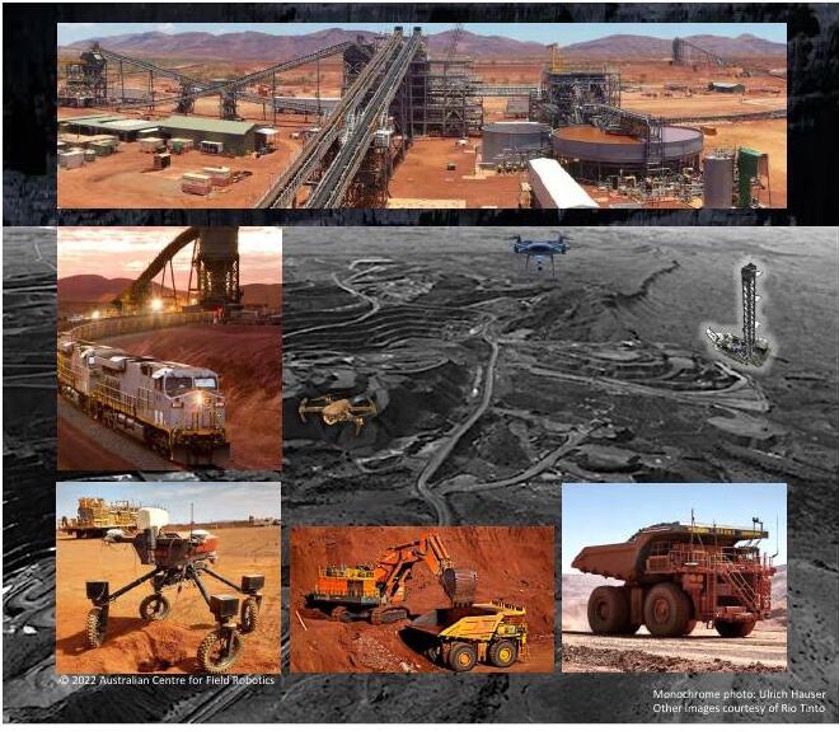
© 2022 Australian Centre for Field Robotics. Монохромная фотография: Ульрих Хаузер. Остальные изображения предоставлены Rio Tinto.
Аннотация
В данной обзорной статье кратко изложены некоторые инженерные проблемы, технологические новшества, разработки в области робототехники и мероприятия по автоматизации, с которыми сталкивается горнодобывающая промышленность, в особенности железорудный регион Пилбара в Западной Австралии. Цель работы - очертить технологический ландшафт и осветить вопросы, представляющие интерес для инженерной аудитории, чтобы повысить осведомлённость о тенденциях применения искусственного интеллекта и автоматизации в горном деле. Предполагается, что читатель ранее не был знаком с горным делом; контекст выстраивается постепенно посредством целенаправленного обсуждения и кратких описаний типичных операций открытой разработки. Основные виды деятельности можно классифицировать как освоение ресурсов, горные, железнодорожные и портовые операции. Между разведкой полезных ископаемых и отгрузкой руды можно выделить приблизительно девять этапов. К ним относятся: геологическая оценка; планирование и подготовка горных работ; эксплуатационное бурение и опробование; взрывные работы и выемка; транспортирование руды и вскрышных пород; дробление и грохочение; складирование и погрузка; распределение по железнодорожной сети; разгрузка вагонов. Задача статьи - описать эти процессы и представить взгляд на некоторые проблемы и возможности с позиции десятилетнего партнёрства промышленности и университета в области НИОКР.
Иллюстрация. Автоматизация горного производства охватывает горные, железнодорожные и портовые операции. На высокотехнологичных предприятиях всё шире применяются роботизированные платформы и аналитика данных [1]. Среди примеров - автономные буровые установки, карьерные самосвалы, экскаваторы, конвейеры, беспилотные летательные аппараты, поезда и суда.
Предисловие
В последнее десятилетие предпринимаются согласованные усилия по повышению эффективности и безопасности горных работ за счёт автоматизации. Преимущества роста производительности и снижения воздействия профессиональных опасностей на работников карьеров очевидны. Менее очевидно, какие именно инженерные задачи ставят открытые горные работы и каким образом для их решения можно привлечь междисциплинарные исследования или новаторские идеи из других областей. Настоящая статья стремится доступно объяснить эти вопросы широкой аудитории. В ней раскрываются некоторые инженерные задачи, технологические новшества, робототехнические разработки и мероприятия по автоматизации, встречающиеся в горнодобывающей промышленности. Тем самым расширяется современное представление о том, что автоматизация, робототехника и интеллектуальные системы способны дать промышленности, особенно открытой разработке месторождений. Примеры и ссылки показывают, как машинное обучение, дистанционное зондирование, геостатистика, планирование и оптимизация применяются для решения конкретных задач в таких крупномасштабных взаимосвязанных системах. Читатель сможет понять ключевые процессы, выявить некоторые проблемы и возможности горной отрасли, а также потенциальные направления собственного вклада в будущем.
Отличительная особенность этой обзорной статьи состоит в многослойности и разнообразии содержания. Хотя основное внимание уделено инженерным задачам и инновациям в открытом горном деле, статья также знакомит с передовыми технологиями и будущими тенденциями. Обсуждение опирается на междисциплинарные взгляды и опыт работы в различных областях.
Обзор
К моменту написания статьи прошло пятнадцать лет с тех пор, как Дюррант-Уайт, Неттлтон, Небот, Шединг и другие сформулировали концепцию автономного рудника с дистанционным управлением в серии публикаций [2]-[12] и патентов [13]-[24]. Эти основополагающие работы и инженерный вклад оставили долговременное наследие и вывели австралийскую горнодобывающую промышленность на передовые позиции по объёмам инвестиций в технологии и темпам их внедрения [25], [26]. Беспилотные летательные аппараты (БПЛА) [27], [28] и технологии дистанционного зондирования применяются при съёмках для повышения производительности, улучшения планирования горных работ, безопасности и управления запасами. К другим значимым примерам и историческим результатам относятся внедрение автономных буровых установок, открытие в Перте первого в мире центра дистанционного управления горными работами и эксплуатация полностью автономных поездов, перевозящих железную руду через Пилбару от карьера до порта. Среди мотивов подготовки статьи - дать сведения о более поздних разработках, подчеркнуть междисциплинарный характер работы и отметить вклад коллег прошлого и настоящего.
На раннем этапе, примерно в 1998-2006 гг., проектные предложения были в значительной степени сосредоточены на задачах картографирования, локализации и навигации [29]-[36] в неструктурированной и динамичной среде горного предприятия. Важной частью общей концепции было и остаётся применение вероятностного подхода к горному делу: поскольку это крупномасштабная система со множеством взаимодействующих элементов, исчерпывающие знания, одновременно охватывающие геологию и эксплуатацию оборудования, практически недостижимы. В последующие годы консолидация программы привела к устойчивому развитию других исследовательских направлений: гауссовских процессов [37]-[42], гиперспектральной съёмки [43]-[48], геостатистики и моделирования границ [49]-[57], геомеханики и распознавания горных пород [58]-[61], производственного планирования и диспетчеризации самосвалов [62]-[66], управления системами [67]-[72], калибровки датчиков [73]-[76], компьютерного зрения и восприятия, включая глубокое обучение [77]-[85]. Наряду с этим слияние данных [86], [87], машинное обучение и вероятностные рассуждения [88]-[97] - дисциплины, глубоко укоренённые в математике и ИИ, - а также стохастическая оптимизация [98]-[101] продолжают играть существенную роль в развитии автоматизации горного производства. По мере рассмотрения процессов и операций в статье проявится более широкая картина их взаимосвязанности.
Объединяющая тема состоит в том, что интересное сочетание интеллектуальных систем, вычислительных платформ и гибридных технологий определяет применение и адаптацию средств автоматизации в горнодобывающей промышленности для удовлетворения конкретных потребностей. Всё чаще как небольшие, так и крупномасштабные задачи решаются в рамках интегрированных рабочих процессов.
Оценивая влияние цифровизации, Всемирный экономический форум предположил, что цифровая трансформация принесёт горнодобывающему и металлургическому секторам 320 млрд долл. США за десятилетие до 2025 г. Это соответствует 2,7% отраслевой выручки и 9% отраслевой прибыли [102]; оценочная ценность для общества и окружающей среды составляет 30 млрд долл. при сокращении выбросов CO₂ на 610 млн т. В отчёте, подготовленном по заказу Межправительственного форума по горному делу, минералам, металлам и устойчивому развитию, также указано, что после внедрения автономных транспортных систем (технологии AHS) эксплуатационные затраты Rio Tinto снизились на 13%, а автономный парк в среднем превосходит управляемый людьми на 14%. За более подробным анализом и примерами инноваций в технологиях и бизнес-моделях крупнейших горнодобывающих компаний мира заинтересованному читателю следует обратиться к [102] и [103]. Обзор и авторские мнения о роли машинного обучения, ИИ и автоматизации процессов в горном деле и науках о Земле приведены в [104] и [105].
Статья посвящена Пилбаре, поскольку этот регион представляет значительную часть железорудных операций Южного полушария. Пилбара - железорудная провинция на севере Западной Австралии, приблизительно в 400 км к востоку от Эксмута и в 320 км к югу от Порт-Хедленда (см. рис. 1). Её площадь составляет 500 000 км²; здесь расположены населённые пункты Брокман, Том-Прайс, Параберду и Ньюмен, каждый со своим аэропортом. Коренные народы йинхаванга, банджима, куррама и пиникура, наряду с другими, обладают исконными правами на эти земли. Летом температура регулярно превышает 40 °C (104 °F), что делает окружающую среду негостеприимной; тем не менее регион обслуживается вахтовой рабочей силой по схеме FIFO - с доставкой самолётом на смену и обратно.
Основные задачи типичного горного предприятия состоят в поиске, добыче и переработке железной руды. Большинство мероприятий по автоматизации, инновациям и исследованиям относится к геостатистическому и геотехническому моделированию, планированию горных работ, календарному планированию, безопасности, чистой энергетике и контролю качества. Хотя процессы и конкретные практики различаются по объектам, жизненный цикл рудника обычно начинается с освоения ресурсов (см. рис. 1). Дополнительные сведения о железорудных минеральных системах, приуроченных к полосчатым железистым формациям (BIF), и геологии мартит-гётитовой минерализации региона Хамерсли приведены в [107]-[109]. Основная часть статьи организована следующим образом. Первый раздел, страницы 3-4, содержит вводную информацию и описывает фундаментальные процессы горнотехнологической цепочки. Во втором разделе, страницы 4-5, кратко рассматриваются инженерные и исследовательские интересы в горном деле. Третий раздел, страницы 5-6, закрепляет эти понятия и представляет концепцию автономного горного производства и пример горного инспекционного робота. Заключительный раздел, страницы 6-12, рассматривает традиционные и новые темы, охватывающие жизненный цикл рудника.
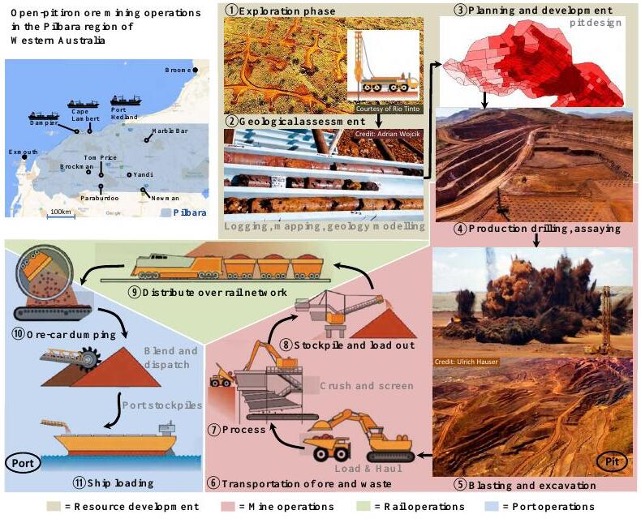
Рисунок 1. Обзор открытых работ по добыче железной руды в регионе Пилбара (адаптировано из [106]).
Перевод обозначений: 1 - разведочный этап; 2 - геологическая оценка (документирование, картирование, геологическое моделирование); 3 - планирование и подготовка, проектирование карьера; 4 - эксплуатационное бурение и опробование; 5 - взрывные работы и выемка; 6 - транспортирование руды и вскрышных пород; 7 - переработка, дробление и грохочение; 8 - складирование и погрузка; 9 - распределение по железнодорожной сети; 10 - разгрузка вагонов; 11 - загрузка судов. Категории: освоение ресурсов; горные операции; железнодорожные операции; портовые операции.
Процессы горнотехнологической цепочки
Цель этого раздела - познакомить читателя с процессами открытой разработки. Описание следует дорожной карте и процессам на рис. 1. На разведочном этапе 1 геологи пытаются обнаружить залежи руды и определить целесообразность их разработки. Для этого может применяться целый ряд геологических, геофизических и металлургических методов. Как правило, выполняется бурение в удалённых районах и анализ полученных образцов. Затем проводится геологическая оценка 2: данные разведки документируются, картируются и интерпретируются с помощью моделей. Традиционные методы описаны в [110]-[112]. Среди новых подходов - применение динамической трансформации шкалы времени совместно с гауссовскими процессами (DTW-GP) [113], [114] и гиперспектральной съёмки [115]-[117]. Первый подход выявляет стратиграфические границы в пластовых залежах по каротажным диаграммам естественного гамма-излучения, а второй оценивает содержание минералов.¹ Этот предварительный процесс устанавливает местоположение, количество и качество рудного тела. На рис. 1 вверху справа концентрация химического компонента в рудной залежи показана различными оттенками красного.
¹ С точки зрения состава конечных компонентов образцы могут содержать различные смеси гематита, охристого и стекловидного гётита. Различные соотношения по-разному влияют на переработку минерального сырья.
На этапе планирования и подготовки 3 инженеры определяют, какие рудные тела и в какой последовательности разрабатывать [118], [119], чтобы обеспечить требуемое качество продукции при приемлемой стоимости [120]. Карьер проектируют с учётом геотехнических факторов, например устойчивости откосов [121], чтобы снизить риски для безопасности и экономики; обычно для доступа к высокосортному полезному ископаемому требуется удалить вскрышу. Планирование может начаться за много лет до разработки месторождения и после ввода рудника в эксплуатацию продолжается ежедневно.
Эксплуатационное бурение 4 начинается после выбора участка открытой разработки. В соответствии с подготовленным планом участки размечают, после чего буровые установки проходят взрывные скважины по заданной схеме. Для скважин выполняется регистрация типа материала, чтобы оценить доли минералов и твёрдость либо дробимость. Такая оценка служит геометаллургическим ориентиром для последующих взрывных работ и переработки. Важно, что на некоторых пробах из взрывных скважин проводится геохимический анализ - опробование, - который расширяет знания и повышает уверенность, поскольку локальная геология может отклоняться от грубых прогнозов ресурсной модели. Следует подчеркнуть, что новые сведения о рудном теле могут использоваться для обновления геологической структуры [54], [122], например границ минерализации, а информация о неопределённости из вероятностной модели - влиять на решения, например на изменение процедуры взрывания [123] или шага скважин на текущем либо следующем уступе.
Скважины заполняют и заряжают взрывчатым веществом. Взрыв разрушает породу, подготавливая её к выемке. Выемка 5 и транспортирование руды и вскрышных пород на различные склады или отвалы 6 составляют основные логистические операции карьера. После взрывания разрушенный материал необходимо извлечь и перевезти для дальнейшей переработки. Термин «погрузочно-транспортные циклы» часто означает перемещение материала из забоя в кузов самосвала экскаватором, карьерной лопатой или фронтальным погрузчиком и последующую перевозку от источника к месту назначения. Это тяжёлая техника. Карьерные самосвалы способны перевозить 360 т при собственной массе свыше 250 т. Поэтому безопасность эксплуатации имеет первостепенное значение: столкновение или иной инцидент может иметь тяжёлые последствия. По мере включения всё большего числа автоматизированных парков в горные операции безопасность становится всё более важной темой. Инциденты, включая потенциально опасные происшествия без последствий, рассматриваются горнодобывающими компаниями и/или расследуются государственными надзорными органами. Риск для жизни людей частично снижается благодаря уменьшению числа работников в потенциально опасных участках рудника.
Переработка руды 7 включает операции от дробления и грохочения до стандартной крупности до обогащения или повышения качества железорудной продукции. Физические процессы удаляют примеси за счёт различий в плотности частиц, крупности, удельном весе либо посредством разделения по крупности на установках сухой или мокрой переработки. Переработанную руду складируют и смешивают в соответствии с требованиями к качеству продукции, затем извлекают со склада и конвейером подают на железнодорожный погрузочный пункт 8. Руду загружают в вагоны и поездом перевозят к портовым сооружениям 9. Железнодорожная система Пилбары находится в частной собственности и представляет одну из наиболее сложных горнопромышленных сетей в мире. Руду доставляют в порт на расстояние до 460 км. Суммарный суточный пробег по сети превышает 15 000 км, что почти соответствует поездке по Транссибирской магистрали туда и обратно. Беспилотный поезд и пути дистанционно контролируются оператором из централизованного командного центра. Грузовой состав обычно включает 230 секций - рудных вагонов - и имеет длину 2,4 км.
Разгрузка вагонов 10 происходит после прибытия поезда в порт. Вагоны выгружают материал в бункеры, откуда он поступает на конвейеры. Портовые склады управляются с учётом вида продукции и плана контроля качества. Передвижные штабелеукладчики формируют штабели длиной 250 м, а затем роторные ковшовые реклаймеры извлекают руду для загрузки судов 11. Хотя процессы описаны как линейная последовательность событий, в действительности между этапами существуют обратные связи. Например, для отслеживания материала [72] и моделирования свойств руды [124] предложены методы ассимиляции данных на основе фильтра Калмана. Если полученный из одного места материал вызывает проблемы с перегрузкой или нарушение переработки, на предшествующем этапе могут быть приняты корректирующие меры. В другом случае подходящий высокосортный материал можно взять из иного места, чтобы получить требуемую смесь. Из-за множества переменных, необходимых для отражения пространственного и геохимического разнообразия и различных горизонтов планирования, обычно возникает сложная крупномасштабная задача оптимизации.
Эта сложная сеть и перемещение материала создают проблемы и возможности в области планирования потоков, разработки графиков добычи и транспортирования, а также количественной оценки рисков при стохастической оптимизации.
Инженерные и исследовательские интересы в горном деле
Современные карьеры становятся всё более автоматизированными. Достижения пространственно-временного анализа в области геоинформационных систем (ГИС) позволили строить карты траекторий транспортных средств [125]. Благодаря этому можно точно отслеживать движение карьерных самосвалов [126], выявлять закономерности связности между различными источниками и пунктами назначения, а также фактические маршруты, например между забоями в карьере и различными складами. Подобные приложения повышают ситуационную осведомлённость, безопасность и соответствие плану в динамичной среде. Они позволяют собирать статистические данные, например о времени движения и ожидания в очереди, которые можно непосредственно передавать в систему управления парком и краткосрочного планирования горных работ. Другие возможности включают оптимизацию маршрутов нескольких транспортных средств [127], корректирующие меры для уменьшения заторов или снижение уклона съезда при превышении допустимого градиента.
Эффективное перемещение материала при наличии множества единиц оборудования на площадке требует тщательного планирования [127], определения последовательности [128] и координации [63]. Для организации такого движения с учётом непредвиденных обстоятельств и наилучшего использования активов - тяжёлого оборудования - может быть разработан планировщик потоков [65]. Обычно суточный план требует извлечь заданный объём материала и переместить его в другие места. В зависимости от качества и метки пункта назначения, присвоенной горным единицам, известным как блоки качества, их направляют на дробилку, склад либо отвал. В задаче диспетчеризации самосвалов система должна выдавать оборудованию инструкции, когда и куда следовать для достижения заданных целей.
Способность учитывать нарушения, например заправку, согласовывать работу с графиком технического обслуживания [100] и реагировать на изменение условий и неожиданные события по информации реального времени станет повсеместной характеристикой технологий следующего поколения, обеспечивающих эффективные, непрерывные и автономные операции.
Ведётся разработка различных сенсорных технологий [129]-[131], а также аппаратно-программная интеграция с роботизированными платформами. Применения включают минералогическую съёмку, мониторинг технического состояния оборудования, прогнозное моделирование показателей горных работ и эргономики [132].
Кроме того, весьма желательно формировать допустимые расписания поездов [133], которые устраняют заторы и ограничения пропускной способности и обеспечивают эффективную доставку запасов с рудников в порт по железнодорожной сети [134]. Это означает рост пропускной способности и использования сети при сокращении времени ожидания. Сохраняется интерес к увязке движения материала с лежащей в основе геологией, то есть к детальному пониманию происхождения и распределения материала. Это важно для задачи минимизации риска по качеству, в которой ищутся оптимальные способы объединения складских запасов для получения однородной смеси в пределах допусков заказчиков [135]. Главное состоит в том, что правильное сочетание складских запасов способно снизить неопределённость - изменчивость - итогового содержания полезного компонента в экспортируемой продукции.
Как инженеры, мы считаем, что аналитика больших данных, машинное обучение, исследование операций, мехатроника и сенсорные технологии способны коренным образом повысить эффективность, производительность, робастность и безопасность горных работ. В то же время будущая траектория определяется рыночными силами, поэтому оптимизм следует соотносить с готовностью инвестировать и экономическими условиями. Для технически сложных комплексных задач реализация проекта часто следует подходу минимально жизнеспособного продукта [136], [137], дополненному этапами контрольной валидации на протяжении жизненного цикла проекта.
Визуальная панорама
Чтобы закрепить рассмотренные понятия, кратко представим наше видение полностью автономного горного производства и покажем технологии на иллюстрациях. Это позволяет сосредоточить внимание на находящейся в разработке роботизированной платформе горного назначения и увидеть более широкую картину с позиции системы систем.
Робот для внутрискважинного обследования (DHIR)
На рис. 2, левая часть, показан экспериментальный робот для обследования взрывных скважин во время испытаний на горном объекте. Основные задачи DHIR состоят в сокращении ручных операций при выполнении скважинных измерений и обеспечении сбора данных в реальном времени для проектирования взрывных скважин и процессов заряжания, соответствующих этапам 4 и 5 на рис. 1. Один из ключевых мотивов разработки - преодолеть недостаток обратной связи между этапами планирования и бурения: автоматическая проверка точности бурения в рамках обеспечения и контроля качества могла бы повысить соответствие проекту. Другая причина - исследовать структурную целостность пробуренных скважин во времени между бурением и заряжанием, поскольку обрушение стенок, образование полостей и выветривание способны влиять на эффективность стратегии взрывания.
DHIR включает комплекс визуальных, радиолокационных и лидарных датчиков [138]. Дополнительную внутрискважинную измерительную аппаратуру можно спускать лебёдочным механизмом, показанным на рис. 2(a)-(b). Зонд, см. рис. 2(c), оснащён 32 лидарными датчиками для измерения диаметра и объёма скважины, направленной вперёд RGB-камерой, светодиодными кольцами с регулировкой яркости, поплавковым датчиком воды, инфракрасным термометром для измерения температуры поверхности стенок и гигабитной линией связи по кабелю. На рис. 2(d) показаны два лидара Ouster, обеспечивающие передний обзор для обнаружения скважин приблизительно на расстоянии 30 см и точного наведения внутри скважины. Радиолокационные системы на рис. 2(e) могут применяться для обнаружения объектов, распознавания жестов, анализа взаимодействия человека и машины либо обеспечения безопасности на горном объекте.
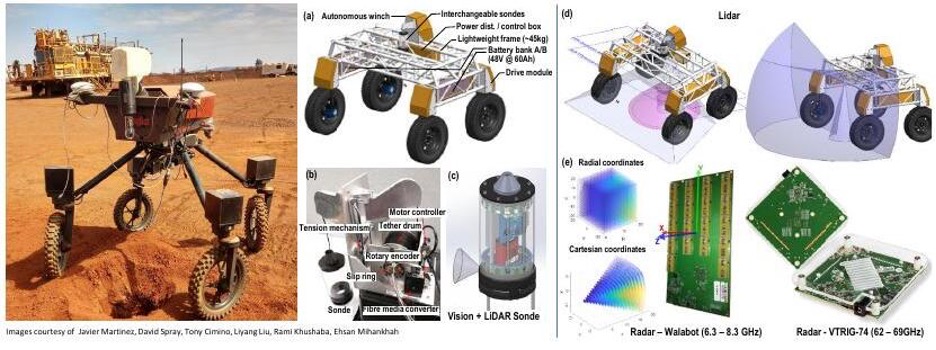
Рисунок 2. Робот горного назначения для обследования взрывных скважин: (a) система в сборе; (b) механические узлы; (c) зонд с камерой и лидаром; (d) компоненты лидара; (e) радиолокационная аппаратура.
Перевод основных обозначений: автономная лебёдка; сменные зонды; блок распределения питания и управления; облегчённая рама около 45 кг; аккумуляторные батареи A/B, 48 В, 60 А·ч; приводной модуль; механизм натяжения; барабан кабеля; контроллер двигателя; поворотный энкодер; контактное кольцо; медиаконвертер оптоволокна; радиальные и декартовы координаты; лидар; радары Walabot 6,3-8,3 ГГц и VTRIG-74 62-69 ГГц.
Общерудничная перспектива
На рис. 3(a) показано применение классификации гиперспектральных изображений для определения минералогии обнажённого забоя; эта работа описана в [43]-[46]. При геологическом моделировании сеточные поверхности широко применяются для разграничения геологических доменов, например минерализованных зон и зон пустой породы, где ошибки локализации способны существенно повлиять на оценку содержания и извлечение руды. На рис. 3(b) показана система деформации поверхности [54], которая автоматически корректирует положение существующих границ по новым геохимическим наблюдениям. Такая возможность появляется на производственном этапе, когда становятся доступными более плотные данные опробования уступов.
Переходя от знаний о рудном теле к планированию горных работ и оптимизации активов, рис. 3(c) показывает алгоритм синтеза динамической карты [125], восстанавливающий дорожную сеть, по которой движутся карьерные самосвалы, на основе GPS-данных транспорта. Эти графы далее используются при составлении планов потоков и принятии решений о диспетчеризации [63], [65]. Синергия достигается за счёт мониторинга движения материала, включая неопределённость состава в ковше [139] и схемы извлечения со складов [140]. Рисунок 3(d) привлекает внимание к управлению парком и бесшовной интеграции автоматизированного оборудования, например буровых установок и карьерных самосвалов. На гистограмме внизу слева показано, что предложенный алгоритм на основе дерева расписаний с достижением потоков и поиска по дереву Монте-Карло [65] увеличивает общий тоннаж перемещённого за смены материала относительно исходного варианта. Рисунок 3(e) указывает на беспилотные поезда и сложности оптимизации железнодорожных расписаний для максимизации пропускной способности и надёжности [133], [134]. Наконец, автоматизация необходима для обеспечения эффективной работы порта.
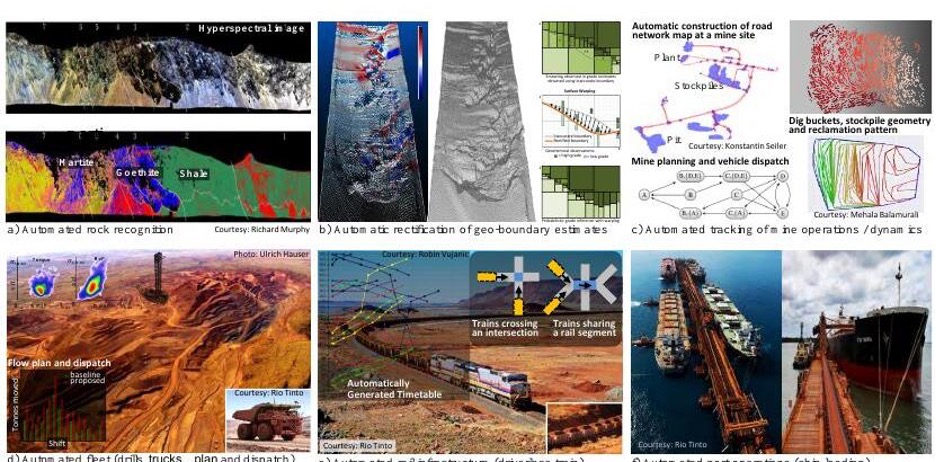
Рисунок 3. Примеры автоматизации открытых горных работ.
Перевод панелей: (a) автоматическое распознавание горных пород по гиперспектральному изображению; (b) автоматическая коррекция оценок геологических границ - неточная и исправленная границы, наблюдаемое размазывание оценок содержания; (c) автоматическое отслеживание горных операций и динамики - построение дорожной сети, геометрия ковшей и складов, схема извлечения; (d) автоматизированный парк - буровые установки, самосвалы, планирование и диспетчеризация; (e) автоматизированная железнодорожная инфраструктура - беспилотный поезд и автоматически сформированное расписание; (f) автоматизированные портовые операции - загрузка судна.
Технологии и аналитические выводы
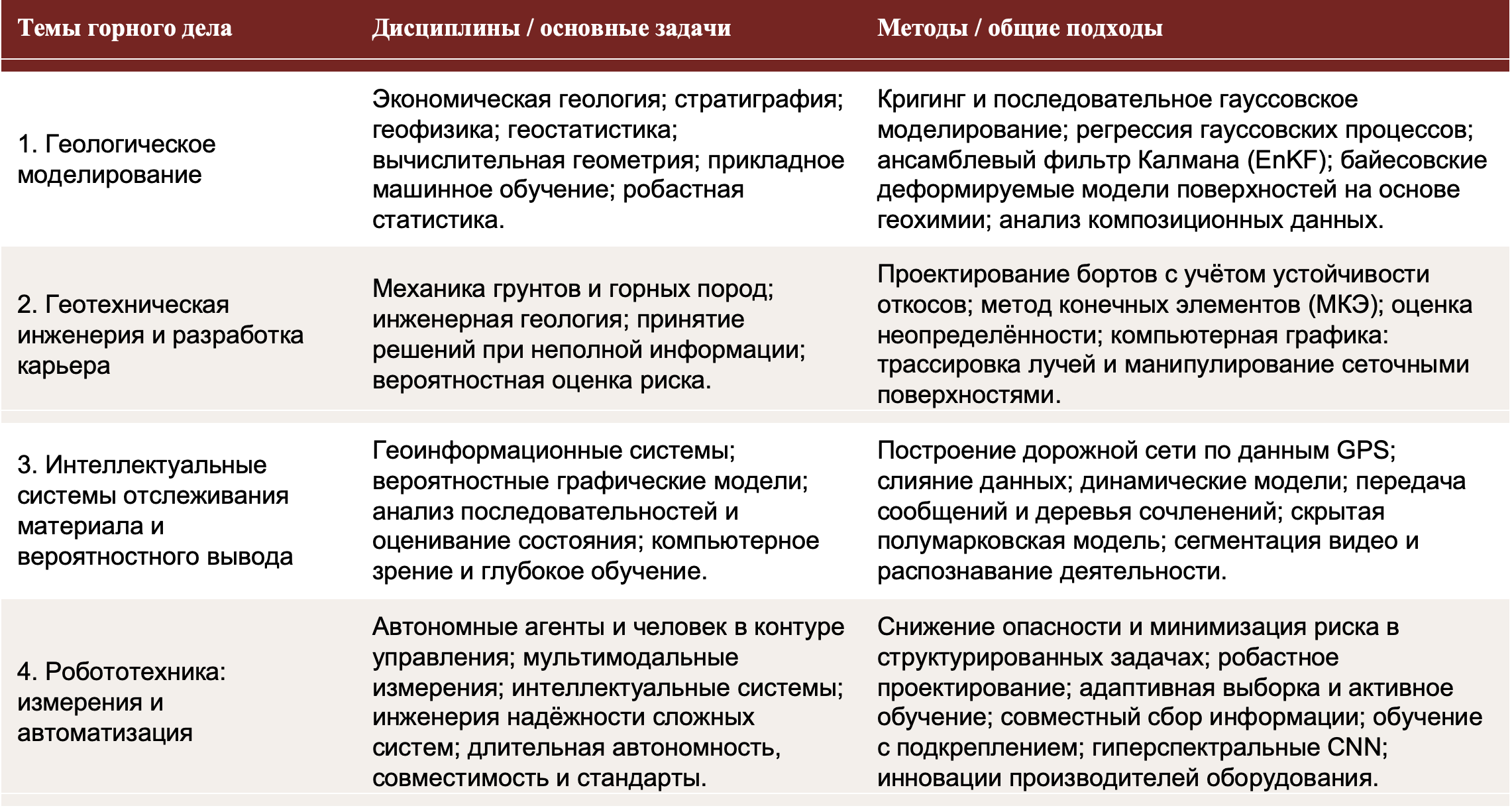
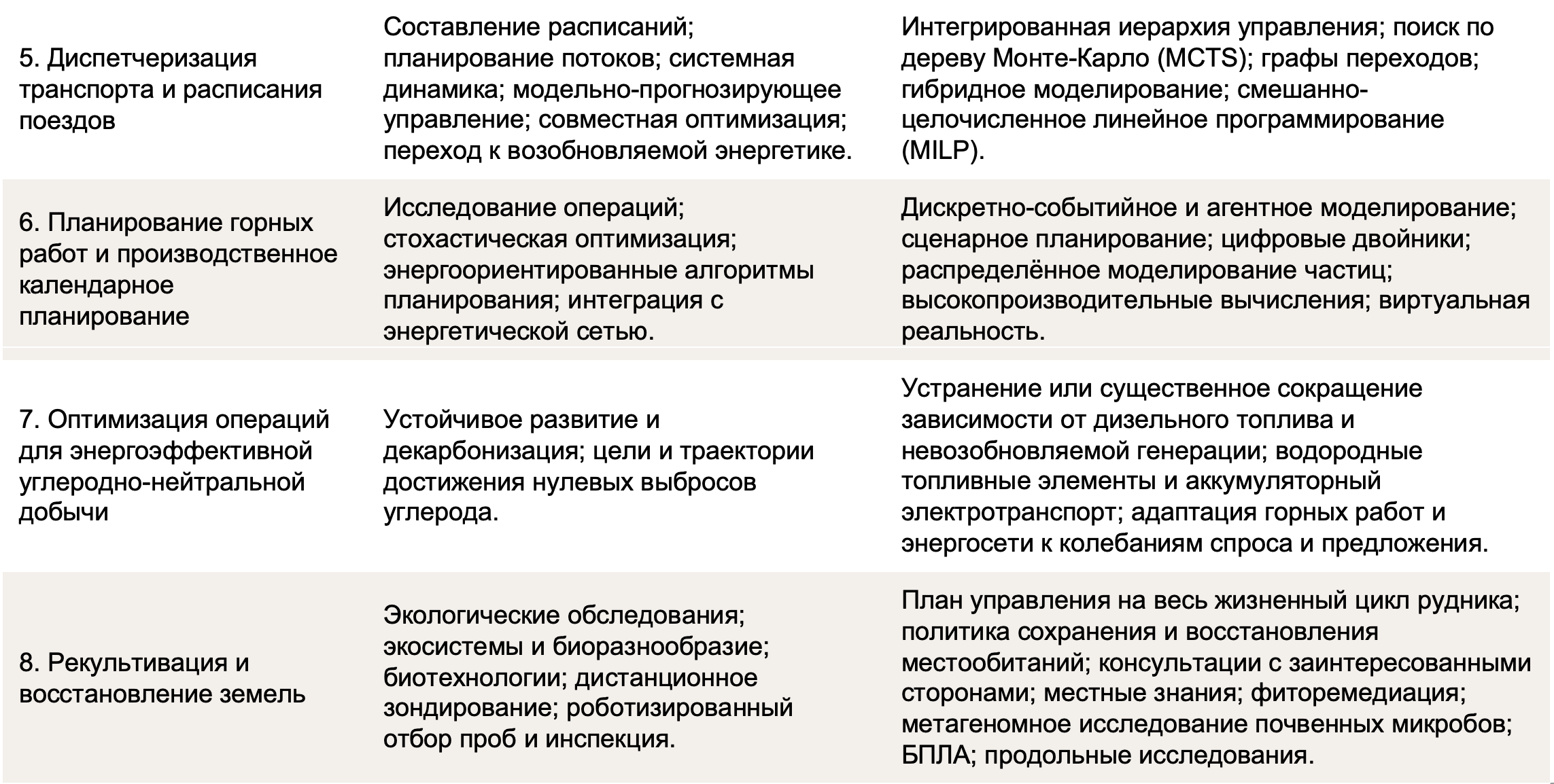
Чтобы глубже понять ключевые вопросы, в этом разделе подробно рассматриваются передовые технологии и приводятся критические выводы о том, как робототехника, автоматизация, искусственный интеллект и машинное обучение могут применяться для решения нынешних и будущих задач открытых горных работ. Обсуждение построено вокруг нескольких тем, охватывающих жизненный цикл рудника, см. рис. 4. Рассматриваются традиционные и новые направления, включая геостатистическое моделирование, стохастическую оптимизацию, углеродно-нейтральную добычу и восстановление земель. Для быстрого ознакомления они представлены в матрице «темы - технологии» в таблице 1.
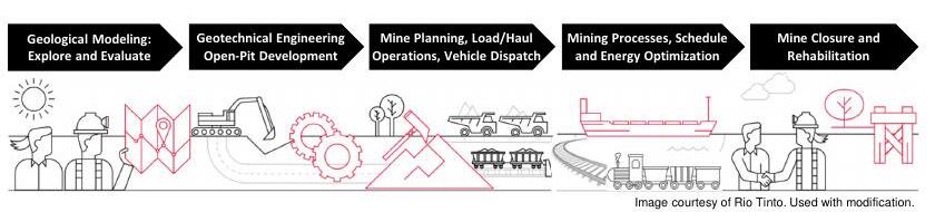
Рисунок 4. Основные темы жизненного цикла рудника.
Перевод обозначений слева направо: геологическое моделирование - разведка и оценка; геотехническая инженерия - развитие карьера; планирование, погрузочно-транспортные операции и диспетчеризация; горные процессы, календарное планирование и энергетическая оптимизация; закрытие рудника и рекультивация.
Таблица 1. Краткий справочник: матрица «темы - технологии» для открытых горных работ в Пилбаре
Геологическое моделирование рудного тела
Значительная часть геологического моделирования связана с выводом геохимических и металлургических свойств рудных залежей на плотной сетке по редким наблюдениям в известных точках. В геостатистике предпочтительным методом является кригинг - оптимальная линейная несмещённая оценка; обычно его дополняют последовательным гауссовским моделированием (SGSim), чтобы компенсировать чрезмерное сглаживание и оценить неопределённость содержания. Недостаток этого подхода - высокая вычислительная стоимость. Эти ограничения устраняются в предложении по физически информированному машинному обучению (PIML) [141], где при обучении используется лишь небольшой объём данных SGSim для выявления пространственной корреляции между имеющимися данными и точками без проб. Если рассматривать целевой признак как стохастическую функцию, гауссовские процессы (GP) [42] образуют непараметрическую байесовскую основу для вычисления апостериорных распределений, прогнозного среднего и ковариации - неопределённости.² Основная предпосылка состоит в том, что пространственные структуры можно описать ковариационной матрицей [39]. Для горного дела формулировка ковариационных функций, ядер, изменена с учётом слияния объёмных данных, что позволяет рассматривать результаты опробования взрывных скважин как интервальные либо межзональные измерения, а не как точки [49]. Это обеспечивает быструю и точную блочную оценку свойств руды с непосредственным учётом размеров блока, без приближения по точкам.
² Связь между кригингом и гауссовскими процессами описана в [142].
Последние достижения сосредоточены на уточнении моделей по поступающим данным. Общая тема - обновление геологических границ по данным взрывных скважин по мере отработки уступов. Важно понимать, что геохимические распределения не являются ни изотропными, ни однородными. Наивная интерполяция через геологические разрывы создаёт артефакты размазывания между различимыми слоями [117]. Поэтому несмещённый прогноз содержания критически зависит от точных геологических поверхностей, например границ минерализации, которые делят пространство моделирования на области и относят наблюдения к геологическим доменам. С позиции оптимального управления в [124] предложен подход к ассимиляции данных на основе ансамблевого фильтра Калмана. С геометрической позиции в [54] описана байесовская деформируемая модель поверхности на основе геохимии (GC-BDS). Этот метод, также называемый деформацией поверхности, исправляет неточности существующих границ, находя смещение, которое минимизирует расхождения между прогнозным и наблюдаемым содержанием. В дальнейшем метод расширили средствами машинного обучения, чтобы оценивать вероятность домена при заданном смещении независимо от типа руды или геохимического состава [143].
Прогноз геометрической тенденции, например угла залегания слоёв в осадочной последовательности ниже рабочего уступа, долгое время остаётся сложной задачей. Исследования направленного прогнозирования ограничены, однако имеются основания полагать, что анализ последовательностей [114] и использование дифференциальных уравнений в частных производных либо вариационных моделей могут быть жизнеспособными, см. дополнительные материалы к [53]. Валидация моделей - одна из областей, где не хватает согласованности. Для решения этой проблемы в [54] предложены краткие метрики ошибок и систематические подходы, позволяющие быстро сравнивать характеристики моделей. Эти методы можно применять совместно с анализом композиционных данных [50], чтобы повысить устойчивость к выбросам и учесть геохимическую изменчивость [144].
Геотехническая инженерия и развитие карьера
По своей сути геотехническая инженерия на открытом руднике занимается оценкой устойчивости отдельных уступов и предотвращением катастрофического разрушения, то есть оползней по борту. Поскольку и выемка, и складирование материала увеличивают стоимость добычи и углеродный след, операторы стремятся делать борта карьера как можно круче, уменьшая объём выемки. Эту цель необходимо уравновесить с повышенным риском разрушения откоса по мере увеличения его крутизны, что может вызвать серьёзное нарушение горных работ и даже гибель людей. Для управления риском устойчивости откосов применяются теоретико-решенческие схемы, обеспечивающие безопасную и экономичную эксплуатацию. Систематическая оценка риска требует оценить свойства материалов в откосах, понять структурные слабости массива, рассчитать устойчивость при различных геометриях и контролировать поведение откосов по мере развития карьера; управление риском включает принятие решений и контрмеры, например применение анкеров и удерживающих сооружений либо временную остановку работ.³ Эти идеи подробнее описаны в [121] и [145].
³ Риск определяется как R = p(T) × Σᵢ p(Cᵢ | T)u(Cᵢ), где p(T) описывает опасность - вероятность возникновения угрозы в заданный период времени; p(Cᵢ | T) - уязвимость, или условную вероятность последствия, например травмы либо экономического ущерба, при возникновении угрозы; u(Cᵢ) - полезность либо влияние последствия.
Устойчивость откоса - способность наклонной поверхности воспринимать собственный вес и внешние силы без смещения. Она зависит от внутренних свойств, таких как прочность породы, наличие и протяжённость трещин и систем отдельностей, а также от внешних факторов: взрывания, интенсивности и продолжительности осадков, инфильтрации и поверхностного стока. Геология месторождения обычно хорошо известна, однако знания о геотехнических свойствах грунтов и пород нередко ограничены, особенно о сцеплении - сопротивлении сдвигу под действием гравитационной нагрузки; эти параметры могут существенно изменяться на небольшой площади. Поэтому управление риском неизбежно связано с решениями при неполной информации. Дополнительную сложность создают уровень грунтовых вод и режимы подземного течения - гидравлические условия, поскольку фильтрация поровой жидкости может заметно влиять на устойчивость. Традиционная характеристика участка требует интерпретации региональной геологии и индуктивных рассуждений, объединяющих топографические карты, скважинные журналы и другие данные с визуальными наблюдениями. Из-за ограничений разведки по времени и стоимости этот процесс обычно менее детален, чем хотелось бы инженерам. Дедуктивные рассуждения, напротив, способны дополнить его непрерывными измерениями и анализом временных рядов. В [121] Карам и соавторы описали успешное применение системы раннего предупреждения с сетью датчиков, включая тензодатчики, на железорудном карьере Наньфэнь. Алгоритмы ИИ позволяют выявлять признаки ослабления и подавать предупреждение ещё до того, как физическое перемещение становится заметным.
В геологически сложных районах нередко пласты по разные стороны разлома падают в разных направлениях и имеют различные геотехнические свойства [121]. Значительная складчатость и локальные отклонения рисунка разломов могут увеличить уязвимость и вероятность клинового обрушения. Поэтому новые сведения, полученные при обследовании площадки или целевом бурении, следует использовать для исправления ошибочных предположений. Это может влиять на учёт безопасности при проектировании карьера и на устройство уступов и подъездных съездов [146]. Конкретный пример приведён Лукасом и де Граафом в [147]. По мере проведения новых геотехнических исследований профиль риска обновляется. Значение этого трудно переоценить: небольшая угловая поправка способна существенно изменить прогнозное положение и определить, какой уступ пересекает поверхность разлома. Ввиду стохастического характера такой изменчивости современные исследования направлены на моделирование стратиграфических структур и последовательное обновление разломов байесовскими методами. Например, гауссовский процесс может вычислять апостериорное распределение поверхности разлома по мере появления новых данных картирования стенок - обнажённых участков поверхности - и геофизического каротажа. Это будет постепенно сужать оболочку неопределённости и обеспечивать более уверенную вероятностную оценку риска и робастное проектирование части карьера ниже текущего уступа.
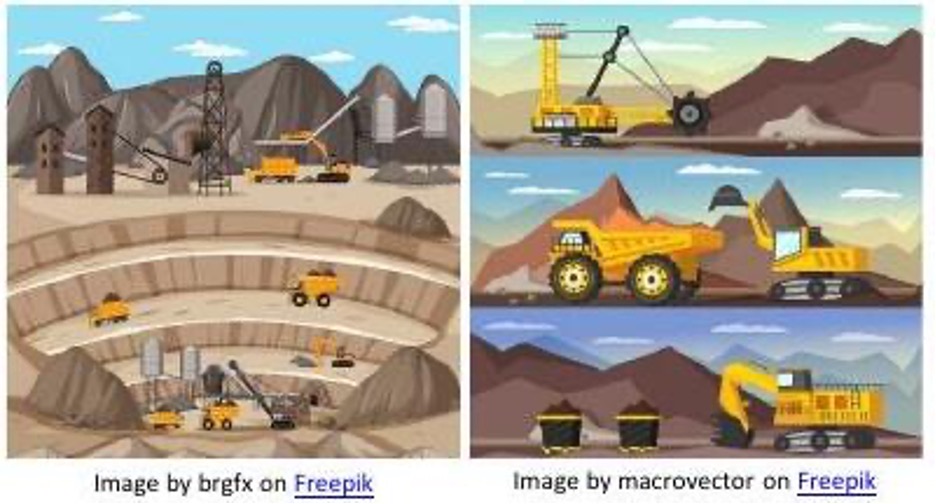
Рисунок 5. Концептуализация темы 2: проектирование карьера (слева) и тем 5-6: диспетчеризация транспорта, поезда и планирование горных работ (справа).
Интеллектуальные системы отслеживания материала и вероятностного вывода
Вероятностные рассуждения и аналитика больших данных [148] необходимы многим интеллектуальным системам в горном деле. Хотя число возможных применений безгранично, здесь выделены три направления на переднем крае современных исследований. Первый пример - динамическое построение дорожной сети, где перемещения транспорта анализируются по GPS-данным карьерных самосвалов для создания навигационных карт. В [125] Зайлер исследовал различные методы вывода карт - прямые инкрементальные методы, кластеризацию точек, оценку плотности ядра и связывание перекрёстков - и сформулировал критические наблюдения об их эффективности в отношении разделения полос и специфичных для горного дела признаков. Работа способствует достижению других целей, таких как оптимизация траекторий нескольких транспортных средств [127].
Второй пример - отслеживание материала с высоким разрешением, при котором динамические состояния рудника, например неопределённость и ожидаемое содержание либо объём материала в каждой воксельной области [72], оцениваются посредством распространения убеждений в вероятностной графической модели. В частности, изменения состава материала вызываются выемкой и переносом, обычно из карьеров на склады или перерабатывающие установки. Это локальные обновления, обрабатываемые передачей сообщений. В [97] Бейли рассмотрел вопросы численной устойчивости и предложил дерево сочленений в форме моментов для гауссовских байесовских сетей, ориентированное на смеси моделей с положительно полуопределёнными матрицами.
Последний пример - вывод о деятельности и материале статистическими методами или машинным обучением для точного отслеживания самосвалов и свойств руды в карьерах. В [149] Маркхэм и соавторы предложили скрытую полумарковскую модель сегментации погрузочно-транспортного цикла по данным телеметрии транспорта. Потребность возникает потому, что многие современные рудники всё ещё используют устаревшие системы с ограниченным набором датчиков, вследствие чего данные имеют низкое качество либо отсутствуют. В [150] глубокие нейронные сети использовались для классификации действий по видео с камер на экскаваторах. Так контролируется производительность землеройной техники в строительстве. Хотя горнодобывающая промышленность отстаёт во внедрении сходной технологии, её значение постепенно осознаётся. Объём исследований компьютерного зрения и машинного обучения для горного дела растёт [151], [152]. Одно из предложений использует землеройную технику как датчик, различающий смешанные группы материала по динамике экскаватора [95].
Робототехника: измерения и автоматизация
Робототехника способна коренным образом повысить безопасность и эффективность хорошо структурированных горных задач. Например, внутрискважинный робот DHIR [138] и роботы для обследования конвейерных лент [153] могут превосходно решать задачи сегментации и локализации, когда фон и геометрия остаются достаточно постоянными [154]. К опасностям карьеров относятся травмы от сдавливания, оползни вследствие разрушения откосов и вдыхание асбеста из волокнистого материала. Воздействие этих рисков можно минимизировать, поручив автономным агентам обнаружение, обследование или локализацию опасности. Помимо предотвращения столкновений и мониторинга эксплуатационных данных, которые уже стали обычными функциями горного оборудования, правильное применение сенсорных технологий и интеллектуальных систем будет критически важным для удовлетворения будущих потребностей.
При моделировании рудного тела слияние данных объединяет редкие и точные геохимические измерения разведочного бурения с плотными, но низкоразрешающими попутными данными опробования эксплуатационных скважин. Такой статический режим оставляет большие пробелы в знаниях о неопробованных местах. Мобильная платформа с адаптивной выборкой [91] на основе обучения с подкреплением [155] либо сжатых измерений [156], [157] может обеспечить экономически эффективную и согласованную стратегию сбора информации: целенаправленные, возможно совместные, действия уменьшают эпистемическую неопределённость по мере развития моделей [158]. В зависимости от характеристик рудного тела робот может применять разные измерительные модальности.⁴
⁴ К устоявшимся методам измерений относятся георадар для бокситов [57], объёмная плотность и гамма-радиометрия для прослоев сланца [117], геомеханические силовые датчики для угля [58], а также элементный анализ в реальном времени импульсным нейтронным датчиком в медных и железорудных залежах.
Инновации производителей оборудования также расширяют границы возможного. Например, технология ShovelSense [130] объединяет высокоскоростные рентгенофлуоресцентные датчики с экскаваторами и обеспечивает измерение содержания - характеристику материала непосредственно в карьере - с беспрецедентным разрешением. При робастном проектировании горных роботов необходимо учитывать пыль, жару, абразивное воздействие и вибрацию. То, что различные категории материала могут иметь сходный химический состав, а охристый гётит и сланец часто смешиваются из-за похожего цвета, создаёт особые сложности для восприятия и классификации. Исследования гиперспектральной съёмки [43], [44] предложили способы различать их и учитывать внутриклассовую изменчивость. Однако внедрение ограничивается стоимостью и другими препятствиями. Одна из практических проблем - тени на неровной поверхности забоя в разное время суток. Изменение освещения и движущиеся тени способны искажать и ухудшать работу гиперспектральных классификаторов минералов. Это фактически сокращает рабочее окно, поскольку обучающие данные часто получают при определённых условиях освещения. Последние работы сосредоточены на робастных и обобщаемых подходах. Например, Уиндрэм и соавторы предложили самообучаемую, инвариантную к теням архитектуру глубокой нейронной сети со стековыми автоэнкодерами, свёрточной нейронной сетью с аугментацией освещения и переносом обучения для преодоления этих трудностей [85].
По мере развития горной робототехники центральными опорами будущих исследований станут длительная автономность и совместимость. Первая поднимает вопросы безопасности, защищённости, доверия [159] и надзора с участием человека в контуре управления. Вторая особенно важна по мере распространения гибридных технологий: повышение надёжности системы систем и использование неоднородных данных распределённой системы для достижения целей более высокого уровня станут значимыми темами исследований. Проблемы совместимости можно, по крайней мере частично, решать разработкой программного обеспечения с открытым исходным кодом, архитектур [160] и протоколов посредством стандартизации с акцентом на взаимодействие машин, связь, качество данных и интеграцию серверной части применительно к горному делу. Интеграция возможностей ИИ и машинного обучения в программное обеспечение и услуги в производственной среде создаёт собственные уникальные трудности. Практические уроки и передовые методы испытаний и сокращения расходов на сопровождение - технического долга - представлены в [161]-[163].
Диспетчеризация транспорта и расписания поездов
По мере расширения применения робототехники, средств автоматизации и цифровых систем в горнодобывающей промышленности появляется всё больше возможностей встраивать в операции более интеллектуальные или оптимальные регуляторы, например системы управления парком и средства составления расписаний. Для внедрения эффективных систем управления обычно требуются надёжная цифровая связь, математическая модель и отслеживание состояния управляемой системы, см. цифровой двойник [164], надёжная реакция системы на команды управления и чётко определённая цель. Эти компоненты обычно требуются или создаются при внедрении роботизированных платформ и автоматизированных процессов; поэтому существует значительная возможность дополнительно повысить эффективность за счёт оптимизированного планирования и управления, помимо непосредственных преимуществ автоматизации и роботизации. Построение всё более интеллектуальной и интегрированной иерархии управления делает операции эффективнее и позволяет быстрее реагировать на изменения или новую информацию.
В [127] представлен оперативный оптимизатор скорости карьерных самосвалов, совместно оптимизирующий скорости машин для максимизации производительности перевозки, сокращения лишних остановок на перекрёстках из-за движения и очередей [165] в пунктах погрузки и разгрузки. Реализуемость такой системы зависит от связи в реальном времени и интерфейса командования скоростями при гарантированном исполнении команд. Координация парка - дополнительное преимущество автоматизации самосвалов: они способны реагировать на регулярно меняющиеся профили скорости и надёжно двигаться так, как водителю-человеку могло бы показаться неоправданно медленно, чтобы прибыть к погрузке точно вовремя.
Оптимизация на уровне парка также демонстрируется достижениями в алгоритмах диспетчеризации систем управления парком [63], [65], [166]. Применение современных методов оптимизации и переосмысление целевых показателей позволили повысить производительность по сравнению с алгоритмом, который до сих пор широко используется в коммерческих системах управления парком [167], [168]. Новый подход к постановке задачи диспетчерской оптимизации состоит в оптимизации производительности во времени на основе системной модели, а не эвристических заменителей производительности, например назначения самосвалов выемочным единицам с короткими очередями либо давно не обслуживавшимся самосвалами. Это позволяет замкнуть автоматический контур управления вокруг производственных целей вместо использования оператора для обратной связи, включая высокочастотное принятие решений и переназначение, без раздражения, которое у людей вызывали бы постоянное взаимодействие и смена задач.
Сходные достижения получены в более широкой цепочке поставок при современном планировании грузоперевозок по железнодорожной сети [133], [134]. Существует множество средств статической оптимизации расписания [169], [170], оперативного перепланирования [171], обнаружения и разрешения конфликтов⁵ [172]; они эффективны для пригородных сетей или сетей, взаимодействующих с другими организациями цепочки поставок, которым необходима определённость отправлений и прибытий. Для более вертикально интегрированной цепочки, такой как железорудные операции Rio Tinto в Пилбаре, либо хорошо интегрированных будущих цепочек более гибкая и эффективная работа достигается без фиксированного расписания. Поезда, доставляющие рудную продукцию в порты, в значительной степени взаимозаменяемы; многие виды рудной продукции также взаимозаменяемы при соблюдении простых ресурсных ограничений. Это создаёт чрезвычайно большое пространство поиска при формировании пунктов назначения и графиков движения поездов. Вуянич и Хилл продемонстрировали новый планировщик поездов без взаимоблокировок со временем работы от нескольких секунд до нескольких минут, тогда как ручное перестроение расписания занимает часы. Это обеспечивает быструю реакцию на инциденты и контур управления интегрированным автоматическим движением поездов. Быстрое перепланирование [134] и даже смена пунктов назначения [133] идеально подходят для автономных поездов, таких как система AutoHaul компании Rio Tinto [173], где встречи и остановки составов, пункты назначения и эффективные команды скорости можно обновлять в реальном времени по мере развития событий и появления в сети новой информации для принятия глобально оптимальных решений.
⁵ То есть существующее расписание корректируется, когда задержка создаёт конфликт, вместо периодического построения расписания с нуля.
Будущее перевозки руды определяется тесно интегрированными модельно-прогнозирующими регуляторами, которые часто интенсивно используют методы оптимизации для моделирования и улучшения последствий множества реальных решений. Интеграция между иерархическими изолированными звеньями жизненно важна для принятия решений в реальном времени, позволяющих избегать близоруких локально оптимальных решений и искать наилучшее поведение всей цепочки поставок.
Планирование горных работ и производственное календарное планирование
Область планирования горных работ и производственного календарного планирования обширна и обычно выходит за пределы транспортирования материала и маршрутизации сети - основных идей предыдущего раздела. Такие задачи возникли в 1960-х гг. с параметрических моделей геометрического развития карьера [174] и превратились в крупное исследовательское направление с гораздо более широким набором факторов. Методы оптимизации планирования обычно включали детерминированные модели рудного тела и алгоритмы, а также поэтапное решение с разделением задачи, например, на определение предельных контуров карьера, геометрии горных блоков и последовательности их отработки.
Планирование горных работ развилось в сторону более интегрированных методов [175], однако, как отмечают Осанлу и соавторы, при использовании точных методов они быстро становятся неосуществимыми. Кроме того, было признано, что максимизация ценности требует учитывать неопределённости рудного тела, производства и даже внешних экономических факторов [176]. Современное планирование всё чаще включает отношения производителя и потребителя, динамические системы [177], постановку целей, распределение ресурсов и комбинаторные задачи; масштаб и охват задач растут вместе с доступной вычислительной производительностью. Цели и горизонты оптимизации зависят от постановки задачи, а операции обычно определяются иерархией оптимизаций с увеличивающимся горизонтом и уменьшающейся детализацией.
С ростом общей вычислительной производительности краткосрочное планирование с горизонтом менее одного-двух лет стало важнейшим направлением исследования операций и коммерческого программного обеспечения [178], [179]. Оно использует более точные модели перемещения руды, складирования, повторной перегрузки и использования оборудования. И в академической, и в коммерческой среде всё шире применяются событийное моделирование и методы стохастической оптимизации, а также разнообразные алгоритмы планирования для разных временных масштабов и эксплуатационных требований. Задачи производственного календарного планирования в общем случае являются NP-трудными [180], поэтому в крупных задачах применяют метаэвристики. Например, генетические алгоритмы [181] и алгоритмы двойного обмена⁶ использовались для оптимизации долгосрочных графиков открытой разработки. Для задач с ограничениями предшествования также предложены гибридные метаэвристические алгоритмы, объединяющие GRASP - жадную рандомизированную адаптивную процедуру поиска - со смешанно-целочисленным программированием [183] и лагранжеву релаксацию с алгоритмом светлячков [184].
⁶ Двойной обмен - родительский алгоритм, управляющий двумя подчинёнными алгоритмами: имитацией отжига и поиском с запретами, Tabu search [182].
Постоянная задача состоит в поиске допустимых и робастных решений, которые экономично и устойчиво удовлетворяют ограничениям с учётом рисков набора вероятных сценариев. Эти риски охватывают неопределённость состава извлекаемого материала, требования к смешению руды, капитальные и эксплуатационные затраты и договорные обязательства. Мы считаем, что реалистичные сценарии и параметры лучше всего формировать по стохастическим моделям карьеров и движения материала, подкреплённым надёжными высокоточными данными, регулярно получаемыми из реальных операций. По мере усложнения моделей требуются цифровые двойники и их оперативная настройка для соответствия реальной работе. Горнодобывающие предприятия должны придавать большое значение сбору и целостности данных.
Развивая выводы [178], в производственном планировании существует проблема интеграции. Имеются не только иерархические горизонты - долгосрочный и краткосрочный: выше по цепочке поставок и вплоть до управления транспортом прослеживается большая иерархия от управления движением до экономического и геополитического моделирования. Тактическое и краткосрочное планирование на недели и месяцы дополнительно осложняется тем, что сохранить аккуратную иерархию управления трудно. Планирование параллельных операций в карьере - выемки, технического обслуживания, строительства дорог - и даже разных режимов выемки не всегда укладывается в простую иерархию.
Переход к возобновляемой энергетике ещё больше осложнит интеграцию, поскольку генерация станет более изменчивой и зависимой от погоды, сезонных и климатических факторов на разных временных масштабах. Хранение энергии дорого, поэтому потребуется компромисс между капитальными вложениями в накопители и стабильностью операций. Доступность энергии повлияет на все уровни производственного планирования, равно как и стоимость хранения для сглаживания провалов генерации. Потребуются новые алгоритмы оптимизации накопления и распределения электроэнергии, зарядки мобильного оборудования и энергоориентированных планов горных работ, учитывающих климатические и сезонные воздействия и предусматривающих меры на безветренные и облачные дни или недели. Эти тенденции означают, что исследования производственного планирования будут всё больше сосредоточиваться на масштабируемых стохастических алгоритмах, стохастических высокоточных моделях типа цифровых двойников, новых способах сопряжения или интеграции планировщиков и энергоориентированном планировании на всех временных масштабах.
Оптимизация операций для энергоэффективной углеродно-нейтральной добычи
Устойчивое развитие и декарбонизация занимают важное место в повестке горнодобывающей промышленности, испытывающей растущее давление регуляторов, инвесторов и заказчиков в отношении сокращения углеродного следа. По мере того как рынки капитала принимают «зелёные» отрасли, компании с более низкими оценками ESG - экологического, социального и корпоративного управления - сталкиваются с более высокой стоимостью доступа к финансированию проектов. В части поставщиков ведущие автопроизводители заявили амбициозные цели декарбонизации материалов. В части потребителей появляются производители с нулевыми выбросами; со временем это повысит спрос на низкоуглеродное железорудное сырьё для выплавки стали. Финансовые расчёты, подражание конкурентам, ожидания общества и требования потребителей ведут отрасль к потенциальному будущему горного производства с нулевыми выбросами. Для достижения климатической цели 1,5 °C к 2050 г. одних изменений портфеля, например продажи угольных активов, недостаточно. Горнодобывающей промышленности потребуется свести прямые выбросы CO₂ к нулю.
Крупные компании, включая Rio Tinto и BHP, установили амбициозные цели сокращения выбросов CO₂ на 15-30% к 2030 г. Эти цели относятся к области 1 - дизельному топливу мобильного оборудования - и области 2 - невозобновляемой генерации электроэнергии, на которые приходится соответственно 40-50% и 30-35% нынешних выбросов CO₂. В [185] Легг и соавторы показали, что интенсивность выбросов сильно различается между железорудными и меднорудными предприятиями: соответственно 0,01-0,2 т CO₂-экв./т и 0,5-20+ т CO₂-экв./т.⁷ Их анализ⁸ показал, что карьерные самосвалы - крупнейший отдельный источник выбросов на руднике, 35% общего объёма, тогда как дробилки, бульдозеры и экскаваторы дают 20%, 7% и 5%. Вместе они создают две трети всех выбросов. Ключевой вывод: общий объём выбросов снизился бы приблизительно на 46%, или 34 Мт, для Fe и на 26%, или 19 Мт, для Cu, если бы 25% предприятий с наибольшими выбросами работали на среднемировом уровне: 0,03 т CO₂-экв./т для Fe и 3,8 т CO₂-экв./т для Cu.
⁷ т CO₂-экв./т означает общий эквивалент CO₂ на одну метрическую тонну. ⁸ Модель декарбонизации основана на австралийском железорудном карьере с выпуском рядовой руды 25 млн т/год.
В отчёте McKinsey [185] рассмотрены варианты декарбонизации, их стоимость и сложность. Основные из них - устойчивые биотоплива, переход на водородные топливные элементы и аккумуляторный электротранспорт, FCEV и BEV, а также дополнение зелёной электроэнергией, например ветровой и солнечной. Масштабные инициативы уже разрабатываются на руднике Gudai-Darri компании Rio Tinto, где планируется покрывать 65% общего электропотребления солнечными фермами и аккумуляторными накопителями. Эти варианты становятся жизнеспособными по мере снижения совокупной стоимости владения карьерными самосвалами BEV/FCEV. Авторы отчёта заключают, что «декарбонизация создаёт значительную возможность для амбициозных участников отличиться и возглавить движение к горному производству с нулевыми выбросами. Чтобы это произошло в масштабе всей отрасли, нескольким заинтересованным сторонам необходимо совместно разработать потенциально экономически выгодные подходы к сокращению выбросов, которые пока недоступны» [185].
Инженерия является частью решения. Поскольку возобновляемые источники энергии в основном стохастичны и зависят от времени и погоды, одна из предсказуемых задач - адаптировать работу рудника и энергосети к колебаниям спроса и предложения. Краткосрочное планирование может стремиться уравновесить эффективность с резервированием, например разумной дополнительной мощностью и учётом будущего перераспределения, чтобы поддерживать постоянную интенсивность потока с помощью некоторого буфера. Долгосрочная оптимизация требует робастных стратегий, учитывающих, как при приемлемой стоимости удовлетворить ограничения по снабжению - парку, качеству и объёму - и смешению, а также справляться с нарушениями и неопределённостями.
Рекультивация и восстановление земель
Восстановление земель после добычи - ещё один вопрос огромной важности. Для получения общественного согласия на работу консультации с традиционными владельцами земель и всесторонняя стратегия рекультивации должны быть неотъемлемыми частями плана управления на протяжении всего жизненного цикла рудника. Некоторые руководящие принципы и опыт описаны в [186]-[188]. Существенная черта - с самого начала сместить акцент с извлечения на обязательство сохранять и восстанавливать местообитания после завершения добычи. Это может включать экологические обследования, сбор семян местных видов или перенос растительного покрова на временную площадку до начала выемки. Продуманный план должен охватывать междисциплинарные взгляды, обычно включая оценку биоразнообразия и установление целей и путей восстановления экосистем. Кроме того, биотехнология и биохимическая переработка горных отходов играют важную роль в устойчивом восстановлении и контроле загрязнения [189].
Исследования в Австралии установили, что «использование семян местных растений имеет фундаментальное значение для крупномасштабной рекультивации и повторного создания самоподдерживающихся экосистем после горных работ с сильным воздействием» [187]. Важный вывод состоял в том, что успешность прорастания семян значительно повышается при применении стимулятора, полученного из дыма. Ветиверная трава Chrysopogon zizanioides также признана эффективным кандидатом для фиторемедиации отвалов железорудных предприятий [190]. Страны всего мира уделяют всё больше внимания восстановлению нарушенных добычей земель; многие сообщили многообещающие результаты, основанные на полевых наблюдениях [191], показателях здоровья почвы [192] и метагеномных исследованиях почвенных микроорганизмов [193]. Дистанционное зондирование со спутников и беспилотников, вероятно, сыграет ключевую роль в оценке успеха крупномасштабного устойчивого восстановления, особенно при обнаружении изменений растительности. На макроскопическом уровне последние достижения сельскохозяйственной робототехники, компьютерного зрения и машинного обучения [194], [195] предлагают гибкие масштабируемые решения для мониторинга здоровья почвы, отбора и анализа проб и борьбы с сорняками. Вероятно, это сформирует крупномасштабные продольные наборы данных, которые будут информировать и повышать эффективность и устойчивость практик рекультивации и управления землями.
Заключительные замечания
Если взглянуть на разнообразные и сложные технологии автоматизации горного производства, неудивительно, что её развитие нельзя свести к одному источнику или моменту времени. Скорее, оно состоит из параллельных потоков прогресса, которым, по-видимому, суждено сходиться по мере роста вычислительного интеллекта. Одним из возможных направлений является постепенное внедрение полуавтономных агентов совместного сбора информации, возможно с новыми масштабируемыми методами измерений в распределённых системах и вероятностным слиянием данных из неоднородных источников, для достижения более высоких и амбициозных целей. Эти цели могут относиться к комплексному планированию горных работ и динамическому распределению ресурсов либо к реализации адаптивных решений для энергоэффективных открытых операций. Сопутствующая задача - распознавать фундаментальные сдвиги в моделируемых процессах и предположениях и робастно реагировать на дрейф данных и концепций и на нарушения в меняющейся среде, обеспечивая непрерывные операции и длительную автономность во взаимосвязанной системе. Вероятно, это наблюдение применимо ко множеству задач восприятия, геостатистики, машинного обучения и стохастической оптимизации в горном деле.
Новые возможности автоматизации существуют во всём спектре и почти во всех аспектах открытых горных работ. Некоторые требуют специальных знаний, которые можно развивать в тесном сотрудничестве с профильными экспертами и промышленностью. Другие требуют изобретательности и инженерных навыков, широко распространённых в сообществе робототехники и искусственного интеллекта. Авторы считают, что значительный прогресс может быть достигнут благодаря взаимодействию университетов и промышленности и содержательным контактам между обеими группами.
Успешное партнёрство требует терпения и доброй воли, согласования коммерческих и технических целей и следования общим интересам в рамках единого видения. Оно также предполагает готовность ориентироваться в изменениях, учиться и применять новые технологии для достижения стратегических целей. Обязательство вести исследования и разработки, вероятно, является осмотрительным инвестиционным решением. В долгосрочной перспективе оно способно вызвать трансформационные изменения, снизить риски и повысить эффективность и производительность.
Электрификация горного транспорта - снижение зависимости от ископаемого топлива - в настоящее время является одним из главных стратегических приоритетов многих горнодобывающих компаний. Снижение выбросов углерода отвечает как экономическим, так и экологическим требованиям ответственного корпоративного поведения. Вместе с этим возникает задача аккумуляторного хранения и эксплуатации устойчивой энергосети, поддерживающей горные работы.
Опыт, накопленный благодаря критическому анализу, внедрению и диверсификации технологий, позволяет отраслям сохранять опережающие позиции и быстрее адаптироваться к будущим вызовам. Мы надеемся, что статья пробудит интерес широкого сообщества и станет полезной отправной точкой для понимания проблем и возможностей автоматизации горного производства.
Благодарности
Работа выполнена при поддержке Австралийского центра полевой робототехники и Центра автоматизации горного производства Rio Tinto. Авторы благодарят всех студентов и сотрудников прошлого и настоящего, внёсших вклад в успех RTCMA.
Литература
[1] D. Brightmore, Rio Tinto: Innovation is the key to transformation. Published by miningdigital, 2021.
[2] E. M. Nebot, “Surface mining: Main research issues for autonomous operations,” in Robotics Research, Springer, 2007, pp. 268–280.
[3] S. Vasudevan, F. Ramos, E. Nettleton, and H. Durrant-Whyte, “A mine on its own—fully autonomous, remotely operated mine,” IEEE Robotics & Automation Magazine, vol. 17, no. 2, pp. 63–73, 2010.
[4] J. A. Marshall, A. Bonchis, E. Nebot, and S. Scheding, “Robotics in mining,” in Springer Handbook of Robotics, Springer, 2016, pp. 1549–1576.
[5] R. Madhavan, G. Dissanayake, and H. Durrant-Whyte, “Mapbuilding and map-based localization in an undergroundmine by statistical pattern matching,” in Proceedings. International Conference on Pattern Recognition (Cat. No. 98EX170), IEEE, vol. 2, 1998, pp. 1744–1746.
[6] J. M. Roberts, E. S. Duff, P. I. Corke, P. Sikka, G. J. Winstanley, and J. Cunningham, “Autonomous control of underground mining vehicles using reactive navigation,” in Proceedings 2000 ICRA. Millennium Conference. IEEE International Conference on Robotics and Automation. Symposia Proceedings (Cat. No. 00CH37065), IEEE, vol. 4, 2000, pp. 3790–3795.
[7] A. T. Le, Q. Nguyen, Q. Ha, et al., “Towards autonomous excavation,” in Field and Service Robotics, Springer, 1998, pp. 124–128.
[8] E. Widzyk-Capehart, G. Brooker, S. Scheding, et al., “Millimetre wave radar visualisation system: Practical approach to transforming mining operations,” in Mechatronics and Machine Vision in Practice, Springer, 2008, pp. 139–165.
[9] P. Elinas, “Multi-goal planning for an autonomous blasthole drill,” in Nineteenth International Conference on Automated Planning and Scheduling, 2009.
[10] X. Fan, S. Singh, F. Oppolzer, et al., “Integrated planning and control of large tracked vehicles in open terrain,” in IEEE International Conference on Robotics and Automation, IEEE, 2010, pp. 4424–4430.
[11] P. Thompson, E. Nettleton, and H. Durrant-Whyte, “Distributed large scale terrain mapping for mining and autonomous systems,” in 2011 IEEE/RSJ International Conference on Intelligent Robots and Systems, IEEE, 2011, pp. 4236– 4241.
[12] J. I. Nieto, S. T. Monteiro, and D. Viejo, “3D geological modelling using laser and hyperspectral data,” in 2010 IEEE International Geoscience and Remote Sensing Symposium, IEEE, 2010, pp. 4568–4571.
[13] H. Durrant-Whyte, F. T. Ramos, and P. J. Hatherly, Method and system for exploiting information from heterogeneous sources, US Patent 8,315,838, Nov. 2012.
[14] E. Nettleton, R. Hennessy, H. Durrant-Whyte, A. H. Göktogan, S. P. Singh, and G. E. M. D. C. Bandara, Method and system for regulating movement of an entity between zones, US Patent 8,886,382, Nov. 2014.
[15] E. Nettleton, R. Hennessy, H. Durrant-Whyte, A. H. Göktogan, and S. P. Singh, Control system for autonomous operation, US Patent 9,146,553, Sep. 2015.
[16] P. Elinas and S. P. Singh, Drill hole planning, US Patent 9,129,236, Sep. 2015.
[17] C. B. McHugh and E. W. Nettleton, Method of, and a system for, controlling a drilling operation, US Patent App. 16/165,151, Feb. 2019.
[18] E. Nettleton, R. Hennessy, H. Durrant-Whyte, A. H. Göktogan, P. J. Hatherly, and F. T. Ramos, Integrated automation system with picture compilation system, US Patent 9,297,256, Mar. 2016.
[19] K. Silversides, R. Murphy, and D. Wyman, Determination of rock types by spectral scanning (Patent WO2011094818A1) filed: Feb 4, 2011, 2011.
[20] K. Silversides, A. Melkumyan, D. Wyman, and P. J. Hatherly, Systems and methods for processing geophysical data (Patent WO2013188911) filed: June 18, 2013, 2013.
[21] D. Robinson, M. Balamurali, A. Melkumyan, A. Lowe, R. Leung, and T. Vasey, Automated updating of geological model boundaries for improved ore extraction (Patent PCT/AU2019/051399, US17/415,132) filed: December 18, 2018, Jun. 2020.
[22] A. Hill, T. Albrecht, K. Seiler, A. Palmer, S. Scheding, and G. Callow, Mining system (Patent PCT/AU2018/051176, US16/764,731) filed: Oct 31, 2018, Jun. 2021.
[23] W. Jones, A hybrid method for controlling a railway system and an apparatus therefor (Provisional patent AU2021902689), Technological Resources Pty Ltd., filed: August 24, 2021.
[24] R. Vujanic, A. Qadir, A. Hill, S. Scheding, and S. Sukkarieh, Building dispatch stockpiles with requisite chemical component composition (Australian Provisional Patent Application 2022900785) filed: March 28, 2022, Mar. 2022.
[25] “AXT Pty Ltd. Automated Mineralogy Incubator aids technology adoption. Published by mining.com.” (2017), [Online]. Available: https://www.mining.com/web/automatedmineralogy - incubator - aids - technology - adoption (visited on 06/13/2017).
[26] L. Housego, Rio: Mining should be the incubator for automation. Published by the Australian Financial Review, 2019.
[27] “Equinox’s Drones. How UAV and drone technology is influencing mining operation.” (2020), [Online]. Available: https : / / www . equinoxsdrones . com / blog / how - uav - and - drone - technology - is - influencing - mining - operation (visited on 06/03/2020).
[28] “Emesent. Hovermap for mining.” (2022), [Online]. Available: https://www.emesent.com/industries/mining/ (visited on 07/07/2022).
[29] H. Durrant-Whyte and T. Bailey, “Simultaneous localization and mapping: Part I,” IEEE Robotics & Automation Magazine, vol. 13, no. 2, pp. 99–110, 2006.
[30] T. Bailey and H. Durrant-Whyte, “Simultaneous localization and mapping (SLAM): Part II,” IEEE Robotics & Automation Magazine, vol. 13, no. 3, pp. 108–117, 2006.
[31] J. Nieto, T. Bailey, and E. Nebot, “Scan-SLAM: Combining EKF-SLAM and scan correlation,” in Field and Service Robotics, Springer, 2006, pp. 167–178.
[32] L. D. Perera, A. Melkumyan, and E. Nettleton, “On the linear and nonlinear observability analysis of the SLAM problem,” in 2009 IEEE International Conference on Mechatronics, IEEE, 2009, pp. 1–6.
[33] L. D. Perera and E. Nettleton, “Nonlinear observability of the centralized multi-vehicle SLAM problem,” in 2010 IEEE International Conference on Robotics and Automation, IEEE, 2010, pp. 3171–3178.
[34] S. Scheding, G. Dissanayake, E. M. Nebot, and H. DurrantWhyte, “An experiment in autonomous navigation of an underground mining vehicle,” IEEE Transactions on Robotics and Automation, vol. 15, no. 1, pp. 85–95, 1999.
[35] S. Thrun, S. Thayer, W. Whittaker, et al., “Autonomous exploration and mapping of abandoned mines,” IEEE Robotics & Automation Magazine, vol. 11, no. 4, pp. 79–91, 2004.
[36] K. M. Seiler, S. P. Singh, S. Sukkarieh, and H. Durrant-Whyte, “Using Lie group symmetries for fast corrective motion planning,” The International Journal of Robotics Research, vol. 31, no. 2, pp. 151–166, 2012.
[37] S. Vasudevan, F. Ramos, E. Nettleton, and H. Durrant-Whyte, “Gaussian process modeling of large-scale terrain,” Journal of Field Robotics, vol. 26, no. 10, pp. 812–840, 2009.
[38] S. Vasudevan, F. Ramos, E. Nettleton, and H. Durrant-Whyte, “Large-scale terrain modeling from multiple sensors with dependent gaussian processes,” in 2010 IEEE/RSJ International Conference on Intelligent Robots and Systems, IEEE, 2010, pp. 1215–1221.
[39] A. Melkumyan and F. T. Ramos, “A sparse covariance function for exact gaussian process inference in large datasets,” in International Joint Conference on Artificial Intelligence, 2009.
[40] A. Melkumyan and F. Ramos, “Multi-kernel Gaussian processes,” in International Joint Conference on Artificial Intelligence (IJCAI), 2011.
[41] A. Melkumyan and F. Ramos, “Non-parametric Bayesian learning for resource estimation in the autonomous mine,” in Proceedings, Applications of Computers and Operations Research in the Minerals Industries (APCOM), 2011, pp. 209– 215.
[42] A. Jewbali, F. T. Ramos, and A. Melkumyan, “A nonparametric Bayesian framework for automatic block estimation,” in Proceedings, Applications of Computers and Operations Research in the Minerals Industries (APCOM), 2011, pp. 1–20.
[43] R. J. Murphy, S. T. Monteiro, and S. Schneider, “Evaluating classification techniques for mapping vertical geology using field-based hyperspectral sensors,” IEEE Transactions on Geoscience and Remote Sensing, vol. 50, no. 8, pp. 3066–3080, 2012.
[44] R. J. Murphy and S. T. Monteiro, “Mapping the distribution of ferric iron minerals on a vertical mine face using derivative analysis of hyperspectral imagery (430–970 nm),” ISPRS Journal of Photogrammetry and Remote Sensing, vol. 75, pp. 29–39, 2013.
[45] R. J. Murphy, A. Chlingaryan, and A. Melkumyan, “Gaussian processes for estimating wavelength position of the ferric iron crystal field feature at ∼900 nm from hyperspectral imagery acquired in the short-wave infrared (1002–1355 nm),” IEEE Transactions on Geoscience and Remote Sensing, vol. 53, no. 4, pp. 1907–1920, 2014.
[46] R. J. Murphy, Z. Taylor, S. Schneider, and J. Nieto, “Mapping clay minerals in an open-pit mine using hyperspectral and LiDAR data,” European Journal of Remote Sensing, vol. 48, no. 1, pp. 511–526, 2015.
[47] S. Schneider, R. J. Murphy, and A. Melkumyan, “Evaluating the performance of a new classifier–the GP-OAD: A comparison with existing methods for classifying rock type and mineralogy from hyperspectral imagery,” ISPRS Journal of Photogrammetry and Remote Sensing, vol. 98, pp. 145–156, 2014.
[48] D. Ramakrishnan and R. Bharti, “Hyperspectral remote sensing and geological applications,” Current Science, pp. 879– 891, 2015.
[49] D. Robinson, A. Melkumyan, and A. Chlingaryan, Estimating material properties (Patent WO2014/134655A8, US2016/0033676A1, AU2013/900742) filed: March 5, 2013, Dec. 2014.
[50] R. Leung, M. Balamurali, and A. Melkumyan, “Sample truncation strategies for outlier removal in geochemical data: The MCD robust distance approach versus t-SNE ensemble clustering,” Mathematical Geosciences, vol. 53, no. 1, pp. 105– 130, 2021.
[51] M. Balamurali, K. L. Silversides, and A. Melkumyan, “A comparison of t-SNE, SOM and SPADE for identifying material type domains in geological data,” Computers & Geosciences, vol. 125, pp. 78–89, 2019.
[52] N. Mery, X. Emery, A. Cáceres, D. Ribeiro, and E. Cunha, “Geostatistical modeling of the geological uncertainty in an iron ore deposit,” Ore Geology Reviews, vol. 88, pp. 336–351, 2017.
[53] R. Leung, “Subsurface boundary geometry modeling: Applying computational physics, computer vision, and signal processing techniques to geoscience,” IEEE Access, vol. 7, pp. 161 680–161 696, 2019.
[54] R. Leung, A. Lowe, A. Chlingaryan, A. Melkumyan, and J. Zigman, “Bayesian surface warping approach for rectifying geological boundaries using displacement likelihood and evidence from geochemical assays,” ACM Transactions on Spatial Algorithms and Systems, vol. 8, no. 1, pp. 1–23, Mar. 2022.
[55] K. L. Silversides and A. Melkumyan, “Boundary identification and surface updates using MWD,” Mathematical Geosciences, vol. 53, no. 5, pp. 1047–1071, 2021.
[56] A. Ball, K. L. Silversides, A. Chlingaryan, and A. Melkumyan, “Creating large scale probabilistic boundaries using Gaussian Processes,” Expert Systems with Applications, vol. 199, p. 116 959, 2022.
[57] A. Ball and L. O’Connor, “Geologist in the loop: A hybrid intelligence model for identifying geological boundaries from augmented ground penetrating radar,” Geosciences, vol. 11, no. 7, p. 284, 2021.
[58] R. Leung and S. Scheding, “Automated coal seam detection using a modulated specific energy measure in a monitorwhile-drilling context,” International Journal of Rock Mechanics and Mining Sciences, vol. 75, pp. 196–209, 2015.
[59] S. T. Monteiro, F. Ramos, and P. Hatherly, “Conditional random fields for rock characterization using drill measurements,” in 2009 International Conference on Machine Learning and Applications, IEEE, 2009, pp. 366–371.
[60] H. Zhou, S. Monteiro, P. Hatherly, F. Ramos, E. Nettleton, and F. Oppolzer, “Spectral feature selection for automated rock recognition using gaussian process classification,” in Proceedings of Australian Conference on Robotics and Automation, Citeseer, 2009.
[61] H. Zhou, S. T. Monteiro, P. Hatherly, F. Ramos, E. Nettleton, and F. Oppolzer, “Automated rock recognition with wavelet feature space projection and Gaussian Process classification,” in 2010 IEEE International Conference on Robotics and Automation, IEEE, 2010, pp. 4444–4450.
[62] M. Samavati, D. Essam, M. Nehring, and R. Sarker, “A new methodology for the open-pit mine production scheduling problem,” Omega, vol. 81, pp. 169–182, 2018.
[63] M. Samavati, A. Palmer, A. Hill, and K. Seiler, “Improvements in plan-driven truck dispatching systems for surface mining,” in Mining Goes Digital, CRC Press, 2019, pp. 357–366.
[64] M. Samavati, D. Essam, M. Nehring, and R. Sarker, “Production planning and scheduling in mining scenarios under ipcc mining systems,” Computers & Operations Research, vol. 115, p. 104 714, 2020.
[65] K. M. Seiler, A. W. Palmer, and A. J. Hill, “Flow-achieving online planning and dispatching for continuous transportation with autonomous vehicles,” IEEE Transactions on Automation Science and Engineering, vol. 19, no. 1, pp. 457–472, Jan. 2022.
[66] M. Blom, A. R. Pearce, and P. J. Stuckey, “Multi-objective short-term production scheduling for open-pit mines: A hierarchical decomposition-based algorithm,” Engineering Optimization, vol. 50, no. 12, pp. 2143–2160, 2018.
[67] J. F. Zubizarreta-Rodriguez and F. Ramos, “Multi-task learning of system dynamics with maximum information gain,” in 2011 IEEE International Conference on Robotics and Automation, IEEE, 2011, pp. 5709–5715.
[68] G. J. Maeda and D. C. Rye, “Learning disturbances in autonomous excavation,” in 2012 IEEE/RSJ International Conference on Intelligent Robots and Systems, IEEE, 2012, pp. 2599–2605.
[69] G. J. Maeda, D. C. Rye, and S. P. Singh, “Iterative autonomous excavation,” in Field and Service Robotics, Springer, 2014, pp. 369–382.
[70] G. J. Maeda, I. R. Manchester, and D. C. Rye, “Combined ILC and disturbance observer for the rejection of near-repetitive disturbances, with application to excavation,” IEEE Transactions on Control Systems Technology, vol. 23, no. 5, pp. 1754– 1769, 2015.
[71] N. D. Wallace, H. Kong, A. J. Hill, and S. Sukkarieh, “Experimental validation of structured receding horizon estimation and control for mobile ground robot slip compensation,” in Field and Service Robotics, Springer, 2021, pp. 411–426.
[72] C. Innes, E. Nettleton, and A. Melkumyan, “Estimation and tracking of excavated material in mining,” in 14th International Conference on Information Fusion, IEEE, 2011, pp. 1– 8.
[73] J. P. Underwood, A. Hill, T. Peynot, and S. J. Scheding, “Error modeling and calibration of exteroceptive sensors for accurate mapping applications,” Journal of Field Robotics, vol. 27, no. 1, pp. 2–20, 2010.
[74] Z. Taylor and J. Nieto, “A mutual information approach to automatic calibration of camera and lidar in natural environments,” in Australian Conference on Robotics and Automation, 2012, pp. 3–5.
[75] Z. Taylor and J. Nieto, “Automatic calibration of lidar and camera images using normalized mutual information,” in Robotics and Automation (ICRA), 2013 IEEE International Conference on, Citeseer, 2013.
[76] Z. Taylor and J. Nieto, “Motion-based calibration of multimodal sensor extrinsics and timing offset estimation,” IEEE Transactions on Robotics, vol. 32, no. 5, pp. 1215–1229, 2016.
[77] J. P. Underwood, D. Gillsjö, T. Bailey, and V. Vlaskine, “Explicit 3D change detection using ray-tracing in spherical coordinates,” in 2013 IEEE international conference on robotics and automation, IEEE, 2013, pp. 4735–4741.
[78] V. Romero-Cano and J. I. Nieto, “Stereo-based motion detection and tracking from a moving platform,” in 2013 IEEE Intelligent Vehicles Symposium (IV), IEEE, 2013, pp. 499– 504.
[79] V. Romero-Cano, J. I. Nieto, and G. Agamennoni, “Unsupervised motion learning from a moving platform,” in 2013 IEEE Intelligent Vehicles Symposium (IV), IEEE, 2013, pp. 111– 115.
[80] V. Romero-Cano, G. Agamennoni, and J. Nieto, “A variational approach to simultaneous multi-object tracking and classification,” The International Journal of Robotics Research, vol. 35, no. 6, pp. 654–671, 2016.
[81] R. Ramakrishnan, J. Nieto, and S. Scheding, “Shadow compensation for outdoor perception,” in 2015 IEEE International Conference on Robotics and Automation (ICRA), IEEE, 2015, pp. 4835–4842.
[82] L. Windrim, R. Ramakrishnan, A. Melkumyan, and R. J. Murphy, “A physics-based deep learning approach to shadow invariant representations of hyperspectral images,” IEEE Transactions on Image Processing, vol. 27, no. 2, pp. 665– 677, 2017.
[83] L. Windrim, A. Melkumyan, R. J. Murphy, A. Chlingaryan, and R. Ramakrishnan, “Pretraining for hyperspectral convolutional neural network classification,” IEEE Transactions on Geoscience and Remote Sensing, vol. 56, no. 5, pp. 2798– 2810, 2018.
[84] L. Windrim, R. Ramakrishnan, A. Melkumyan, R. J. Murphy, and A. Chlingaryan, “Unsupervised feature-learning for hyperspectral data with autoencoders,” Remote Sensing, vol. 11, no. 7, p. 864, 2019.
[85] L. Windrim, A. Melkumyan, R. J. Murphy, A. Chlingaryan, and R. Leung, “Unsupervised ore/waste classification on open-cut mine faces using close-range hyperspectral data,” Geoscience Frontiers, vol. 14, no. 4, Article 101562, 2023.
[86] H. F. Durrant-Whyte, “Data fusion in sensor networks,” in IPSN, vol. 2, 2005.
[87] S. Vasudevan, A. Melkumyan, and S. Scheding, “Efficacy of data fusion using convolved multi-output gaussian processes,” Journal of Data Science, vol. 13, no. 2, pp. 341–367, 2015.
[88] A. Kadkhodaie-Ilkhchi, S. T. Monteiro, F. Ramos, and P. Hatherly, “Rock recognition from MWD data: A comparative study of boosting, neural networks, and fuzzy logic,” IEEE Geoscience and Remote Sensing Letters, vol. 7, no. 4, pp. 680–684, 2010.
[89] S. Monteiro, F. Ramos, and P. Hatherly, “Learning CRF models from drill rig sensors for autonomous mining,” in NIPS workshop: Learning from Multiple Sources with Applications to Robotics, Citeseer, 2009.
[90] S. T. Monteiro, R. J. Murphy, F. Ramos, and J. Nieto, “Applying boosting for hyperspectral classification of ore-bearing rocks,” in 2009 IEEE International Workshop on Machine Learning for Signal Processing, IEEE, 2009, pp. 1–6.
[91] N. Ahsan, S. Scheding, S. T. Monteiro, R. Leung, C. McHugh, and D. Robinson, “Adaptive sampling applied to blast-hole drilling in surface mining,” International Journal of Rock Mechanics and Mining Sciences, vol. 75, pp. 244–255, 2015.
[92] B. Jafrasteh, N. Fathianpour, and A. Suárez, “Comparison of machine learning methods for copper ore grade estimation,” Computational Geosciences, vol. 22, no. 5, pp. 1371–1388, 2018.
[93] R. Leung, M. Balamurali, and A. Lowe, “Surface warping incorporating machine learning assisted domain likelihood estimation: A new paradigm in mine geology modeling and automation,” Mathematical Geosciences, vol. 54, no. 3, pp. 533– 572, 2022.
[94] D. Wedge, A. Lewan, M. Paine, E.-J. Holden, and T. Green, “A data mining approach to validating drill hole logging data in pilbara iron ore exploration,” Economic Geology, vol. 113, no. 4, pp. 961–972, 2018.
[95] L. Liu, M. Balamurali, K. L. Silversides, and R. Khushaba, “Inference of geological material groups using structural monitoring sensors on excavators,” in Australasian Joint Conference on Artificial Intelligence, Springer’s Lecture Notes in Computer Science Series, 2022, pp. 787–797.
[96] R. N. Khushaba, A. Melkumyan, and A. J. Hill, “A machine learning approach for material type logging and chemical assaying from autonomous measure-while-drilling (MWD) data,” Mathematical Geosciences, vol. 54, no. 2, pp. 285–315, 2022.
[97] T. Bailey. “Stabilised moment-form junction tree for Gaussian Bayesian networks with semidefinite models.” (2022), [Online]. Available: https://ssrn.com/abstract=4176478.
[98] A. W. Palmer, A. J. Hill, and S. J. Scheding, “Stochastic collection and replenishment (SCAR): Objective functions,” in 2013 IEEE/RSJ International Conference on Intelligent Robots and Systems, IEEE, 2013, pp. 3324–3331.
[99] A. W. Palmer, A. J. Hill, and S. J. Scheding, “Stochastic collection and replenishment (SCAR) optimisation for persistent autonomy,” in 2014 IEEE/RSJ International Conference on Intelligent Robots and Systems, IEEE, 2014, pp. 2943–2949.
[100] A. W. Palmer, R. Vujanic, A. J. Hill, and S. J. Scheding, “Weekly maintenance scheduling using exact and genetic methods,” Mining Technology, vol. 126, no. 4, pp. 200–208, 2017.
[101] A. W. Palmer, A. J. Hill, and S. J. Scheding, “Modelling resource contention in multi-robot task allocation problems with uncertain timing,” in 2018 IEEE International Conference on Robotics and Automation (ICRA), IEEE, 2018, pp. 3693–3700.
[102] “World Economic Forum. “Digital Transformation Initiative: Mining and Metal Industry.” A white paper in collaboration with Accenture.” (2017), [Online]. Available: http : //reports.weforum.org/digital-transformation/wpcontent/blogs.dir/94/mp/files/pages/files/wefdti-mining-and-metals-white-paper.pdf.
[103] A. Crawford. “Innovation in Mining: Report to the 2018 International Mines Ministers Summit.” (2018), [Online]. Available: https://www.iisd.org/publications/report/ innovation - mining - report - 2018 - international - mines-ministers-summit (visited on 03/14/2018).
[104] J. S. Dramsch, “70 years of machine learning in geoscience in review,” Advances in Geophysics, vol. 61, pp. 1–55, 2020.
[105] D. Ali and S. Frimpong, “Artificial intelligence, machine learning and process automation: Existing knowledge frontier and way forward for mining sector,” Artificial Intelligence Review, vol. 53, no. 8, pp. 6025–6042, 2020.
[106] Rio Tinto, Iron ore production in the Pilbara, 2021.
[107] S. Hagemann, T. Angerer, P. Duuring, et al., “BIF-hosted iron mineral system: A review,” Ore Geology Reviews, vol. 76, pp. 317–359, 2016.
[108] R. J. Murphy and K. L. Silversides, “Investigating variations in background response in measurements of downhole natural gamma in a banded iron formation in the pilbara, western australia,” Journal of Applied Geophysics, vol. 137, pp. 118– 127, 2017.
[109] C. Perring, M. Crowe, and J. Hronsky, “A new fluid-flow model for the genesis of Banded Iron Formation-hosted martite-goethite mineralization, with special reference to the North and South Flank deposits of the Hamersley Province, Western Australia,” Economic Geology, vol. 115, no. 3, pp. 627–659, 2020.
[110] N. Voorhies, S. Bowen, T. Battenhouse, R. Porges, and T. Fox, “From 2D cross-sections to 3D model: A toolset for integrated data management, modelling, and visualization,” in Three-Dimensional Geological Mapping: Workshop extended abstracts; Geological Society of America Annual Meeting, R. C. Berg, H. A. Russell, and L. H. Thorleifson, Eds., Portland, Oregon: Illinois State Geological Survey, Open File Series 2009-4, 2009.
[111] R. C. Berg, S. J. Mathers, H. Kessler, and D. A. Keefer, “Synopsis of current three-dimensional geological mapping and modeling in geological survey organizations,” Ilinois State Geological Survey Circular, vol. 578, 2011.
[112] K. MacCormack, H. Thorleifson, R. Berg, and H. Russell, “Three-dimensional geological mapping,” AER/AGS Special Report 101, 2016.
[113] K. L. Silversides and A. Melkumyan, “A dynamic time warping based covariance function for gaussian processes signature identification,” Computers & Geosciences, vol. 96, pp. 69– 76, 2016.
[114] M. A. George, K. L. Silversides, J. Zigman, and A. Melkumyan, “Bedding angle identification from BIF marker shales via modified dynamic time warping,” Mathematical Geosciences, vol. 53, no. 7, pp. 1567–1585, 2021.
[115] T. Uezato, R. J. Murphy, A. Melkumyan, and A. Chlingaryan, “A novel endmember bundle extraction and clustering approach for capturing spectral variability within endmember classes,” IEEE Transactions on Geoscience and Remote Sensing, vol. 54, no. 11, pp. 6712–6731, 2016.
[116] T. Uezato, R. J. Murphy, A. Melkumyan, and A. Chlingaryan, “Incorporating spatial information and endmember variability into unmixing analyses to improve abundance estimates,” IEEE Transactions on Image Processing, vol. 25, no. 12, pp. 5563–5575, 2016.
[117] K. L. Silversides and R. J. Murphy, “Identification of marker shale horizons in banded iron formation: Linking measurements of downhole natural gamma-ray with measurements from reflectance spectrometry of rock cores,” Near Surface Geophysics, vol. 15, no. 2, pp. 141–153, 2017.
[118] M. Tabesh and H. Askari-Nasab, “Automatic creation of mining polygons using hierarchical clustering techniques,” Journal of Mining Science, vol. 49, no. 3, pp. 426–440, 2013.
[119] A. Mousavi, E. Kozan, and S. Q. Liu, “Open-pit block sequencing optimization: A mathematical model and solution technique,” Engineering Optimization, vol. 48, no. 11, pp. 1932– 1950, 2016.
[120] M. Rezakhah and A. Newman, “Open pit mine planning with degradation due to stockpiling,” Computers & Operations Research, vol. 115, p. 104 589, 2020.
[121] K. Karam, M. He, and L. Sousa, “Slope stability risk management in open pit mines,” Int Geoinf Res Developm J, vol. 7, no. 4, pp. 1–17, 2016.
[122] R. Leung, “Modelling orebody structures: Block merging algorithms and block model spatial restructuring strategies given mesh surfaces of geological boundaries,” Journal of Spatial Information Science, vol. 21, pp. 137–174, 2020.
[123] S. Klerkx, J. Sattarvand, and M. S. Shishvan, “Development of an explosive energy distribution optimization system to accommodate drilling errors by adjusting blasthole charges,” in Proceedings, Applications of Computers and Operations Research in the Minerals Industries (APCOM), 2021, pp. 243– 255.
[124] S. Talesh Hosseini, O. Asghari, J. Benndorf, and X. Emery, “Real-time uncertain geological boundaries updating for improved block model quality control based on blast hole data: A case study for Golgohar iron ore mine in Southeastern Iran,” Mathematical Geosciences, vol. 55, no. 4, pp. 541–562, 2023.
[125] K. M. Seiler, “Haul road mapping from GPS traces,” in Proceedings, Applications of Computers and Operations Research in the Minerals Industries (APCOM), 2021, pp. 257–267.
[126] “Anonymous Authors (for peer-review). Data analytics for open-pit mining: Examining vehicle interactions, material movement and compositional uncertainty with bucket inference and Monte Carlo simulation. pp. 1–31, 2023.” ().
[127] P. Gun, A. Hill, and R. Vujanic, “Multi-vehicle trajectory optimisation on road networks,” in 2019 International Conference on Robotics and Automation (ICRA), IEEE, 2019, pp. 2025– 2031.
[128] M. De Lara, N. Morales, and N. Beeker, “Adaptive strategies for the open-pit mine optimal scheduling problem,” arXiv preprint arXiv:1706.08264, 2017.
[129] P. Krolop, A. Jantschke, S. Gilbricht, K. Niiranen, and T. Seifert, “Mineralogical imaging for characterization of the Per Geijer Apatite iron ores in the Kiruna District, Northern Sweden: A comparative study of mineral liberation analysis and Raman imaging,” Minerals, vol. 9, no. 9, p. 544, 2019.
[130] M. Haest, K. Hume, M. Bradshaw, H. Lang, F. Faraj, and M. Pal, “ShovelSense measuring grade at bucket resolution – the new tool in the mine geologist toolbox,” in 2022 International Mining Geology Conference, AusIMM, 2022, pp. 449– 452.
[131] A. Bona and R. Pevzner, “Distributed acoustic sensing for mineral exploration: Case study,” in ASEG Extended Abstracts, 2018, pp. 1–4.
[132] D. Ali and S. Frimpong, “Artificial intelligence models for predicting the performance of hydro-pneumatic suspension struts in large capacity dump trucks,” International Journal of Industrial Ergonomics, vol. 67, pp. 283–295, 2018.
[133] W. Jones and P. Gun, “Train timetabling and destination selection in mining freight rail networks: A hybrid simulation methodology incorporating heuristics,” Journal of Simulation, pp. 1–14, 2022.
[134] R. Vujanic and A. Hill, “Computationally efficient dynamic traffic optimization of railway systems (arxiv:2105.03924),” IEEE Transactions on Intelligent Transportation Systems, vol. 23, no. 5, pp. 4706–4719, 2022.
[135] H. Zhou, M. Samavati, and A. J. Hill, “Heuristics for integrated blending optimisation in a mining supply chain,” Omega, vol. 102, p. 102 373, 2021.
[136] W. Jones, P. Gun, and M. Foumani, “An MVP approach to developing complex hybrid simulation models,” in Proceedings, Winter Simulation Conference, B. Feng, G. Pedrielli, and Y. Peng et al., Eds., Singapore: IEEE, 2022.
[137] H.-G. Enkler and L. Sporleder, “Agile product development– coupling explorative and established CAx methods in early stages of virtual product development,” Procedia CIRP, vol. 84, pp. 848–853, 2019.
[138] L. Liu, E. Mihankhah, and A. Hill, “Robust blast hole detection for a mine-site inspection robot,” in Australasian Conference on Robotics and Automation, 2022.
[139] M. Balamurali, “A bayesian method for estimating uncertainty in excavated material,” International Journal of Mining, Reclamation and Environment, vol. 36, no. 2, pp. 125– 141, 2022.
[140] M. Balamurali and K. M. Seiler, “Improving geometry dynamic prediction of in-pit stockpiles using geospatial data and polygon models,” in Proceedings, Applications of Computers and Operations Research in the Minerals Industries (APCOM), The Southern African Institute of Mining and Metallurgy, 2021, pp. 105–116.
[141] T. Bai and P. Tahmasebi, “Sequential Gaussian simulation for geosystems modeling: A machine learning approach,” Geoscience Frontiers, vol. 13, no. 1, p. 101 258, 2022.
[142] M. Shekaramiz, T. K. Moon, and J. H. Gunther, “A note on Kriging and Gaussian Processes,” Information Dynamics Laboratory, Electrical and Computer Engineering Department, Utah State University, Tech. Rep., Jan. 2019.
[143] R. Leung, M. Balamurali, and A. Lowe, “Surface warping incorporating machine learning assisted domain likelihood estimation: A new paradigm in mine geology modeling and automation,” Mathematical Geosciences, vol. 54, no. 3, pp. 533– 572, Apr. 2022.
[144] R. Leung, “Measuring sampling fairness and geochemical consensus for blasthole assays within grade-block mining units,” Computers & Geosciences, vol. 171, Article 105286, 2023.
[145] J. Read and P. Stacey, “Guidelines for open pit slope design,” 2009.
[146] I. Kaabachi, F. Meunier, and N. Morales, “Optimizing the ramp design in an open pit mine,” in Proceedings, Applications of Computers and Operations Research in the Minerals Industries (APCOM), 2021, pp. 365–376.
[147] D. Lucas and P. de Graaf, “Iterative geotechnical pit slope design in a structurally complex setting: A case study from Tom Price, Western Australia,” in Proceedings, International Symposium on Slope Stability in Open Pit Mining and Civil Engineering, Australian Centre for Geomechanics, 2013, pp. 513– 526.
[148] Y. Choi, H. Nguyen, X.-N. Bui, and T. Nguyen-Thoi, “Optimization of haulage-truck system performance for ore production in open-pit mines using big data and machine learning-based methods,” Resources Policy, vol. 75, p. 102 522, 2022.
[149] G. Markham, K. M. Seiler, M. Balamurali, and A. J. Hill, “Load-haul cycle segmentation with hidden semi-Markov models,” in IEEE International Conference on Automation Science and Engineering, 2022, pp. 447–454.
[150] J. Kim and S. Chi, “Multi-camera vision-based productivity monitoring of earthmoving operations,” Automation in Construction, vol. 112, p. 103 121, 2020.
[151] Y. Fu and C. Aldrich, “Deep learning in mining and mineral processing operations: A review,” IFAC-PapersOnLine, vol. 53, no. 2, pp. 11 920–11 925, 2020.
[152] J. Valencia, E. Emami, and J. Sattarvand, “Support vector machine and convolutional neural networks applied to blasthole detection over photogrammetry representations,” in Proceedings, Applications of Computers and Operations Research in the Minerals Industries (APCOM), SAIMM, 2021, pp. 83–94.
[153] P. Stefaniak, A. Skoczylas, M. Nowicki, K. Walas, and M. Stachowiak, “Semi-autonomous inspection of a belt conveyor in an industrial environment with the use of a legged robot,” in Proceedings, Applications of Computers and Operations Research in the Minerals Industries (APCOM), 2021, pp. 83– 94.
[154] Z. Zhang, H. Deng, Y. Liu, Q. Xu, and G. Liu, “A semisupervised semantic segmentation method for blast-hole detection,” Symmetry, vol. 14, no. 4, p. 653, 2022.
[155] Z. Levinson and R. Dimitrakopoulos, “Self-learning infill drilling for strategic mine planning: Simultaneously optimising the value of additional information in a mining complex under grade uncertainty,” in Proceedings, Applications of Computers and Operations Research in the Minerals Industries (APCOM), 2021, pp. 347–354.
[156] E. J. Candes and Y. Plan, “A probabilistic and RIPless theory of compressed sensing,” IEEE Transactions on Information Theory, vol. 57, no. 11, pp. 7235–7254, 2011.
[157] H. Calderón, J. F. Silva, J. M. Ortiz, and A. Egaña, “Reconstruction of channelized geological facies based on RIPless compressed sensing,” Computers & Geosciences, vol. 77, pp. 54–65, 2015.
[158] M. Kumral and U. Ozer, “Planning additional drilling campaign using two-space genetic algorithm: A game theoretical approach,” Computers & geosciences, vol. 52, pp. 117–125, 2013.
[159] M. Brundage, S. Avin, J. Wang, et al., “Toward trustworthy AI development: Mechanisms for supporting verifiable claims,” arXiv preprint arXiv:2004.07213, 2020.
[160] P. Pyda, H. Stefaniak P. Dudycz, and A. Skoczylas, “GIS data and the IoT platform architecture design for the mining industry,” in Proceedings, Applications of Computers and Operations Research in the Minerals Industries (APCOM), 2021, pp. 533–546.
[161] D. Sculley, G. Holt, D. Golovin, et al., “Hidden technical debt in machine learning systems,” Advances in neural information processing systems, vol. 28, 2015.
[162] S. Amershi, A. Begel, C. Bird, et al., “Software engineering for machine learning: A case study,” in IEEE/ACM 41st International Conference on Software Engineering: Software Engineering in Practice (ICSE-SEIP), IEEE, 2019, pp. 291– 300.
[163] E. Breck, S. Cai, E. Nielsen, M. Salib, and D. Sculley, “The ML test score: A rubric for ML production readiness and technical debt reduction,” in IEEE International Conference on Big Data, IEEE, 2017, pp. 1123–1132.
[164] M. Servin, F. Vesterlund, and E. Wallin, “Digital twins with distributed particle simulation for mine-to-mill material tracking,” Minerals, vol. 11, no. 5, p. 524, 2021.
[165] O. Putri and S. Andika, “Trucks cycle optimization in open pit coal mining using integrated dispatching system data with queue theory adoption,” in Proceedings, Applications of Computers and Operations Research in the Minerals Industries (APCOM), 2021, pp. 279–290.
[166] J. de Carvalho and R. Dimitrakopoulos, “Smart equipment allocation decisions and updating short-term stochastic production planning in mining complexes through reinforcement learning,” in Proceedings, Applications of Computers and Operations Research in the Minerals Industries (APCOM), 2021, pp. 35–44.
[167] J. White, J. Olson, and S. Vohnout, “On improving truck/shovel productivity in open pit mines,” CIM bulletin, vol. 86, no. 973, pp. 43–49, 1993.
[168] J. White and J. Olson, “Computer-based dispatching in mines with concurrent operating objectives,” Mining Engineering (Littleton, Colorado), vol. 38, no. 11, 1986.
[169] M. Shakibayifar, E. Hassannayebi, H. Jafary, and A. Sajedinejad, “Stochastic optimization of an urban rail timetable under time-dependent and uncertain demand,” Applied Stochastic Models in Business and Industry, vol. 33, no. 6, pp. 640–661, 2017.
[170] Q. Zhang, X. Zhu, L. Wang, and S. Wang, “Simultaneous optimization of train timetabling and platforming problems for high-speed multiline railway network,” Journal of Advanced Transportation, vol. 2021, pp. 1–16, 2021.
[171] J. Liao, F. Zhang, S. Zhang, and C. Gong, “A real-time train timetable rescheduling method based on deep learning for metro systems energy optimization under random disturbances,” Journal of Advanced Transportation, vol. 2020, pp. 1– 14, 2020.
[172] A. D’Ariano, F. Corman, D. Pacciarelli, and M. Pranzo, “Reordering and local rerouting strategies to manage train traffic in real time,” Transportation science, vol. 42, no. 4, pp. 405–419, 2008.
[173] K. Smith. “Rise of the machines: Rio Tinto breaks new ground with AutoHaul.” (2019), [Online]. Available: https: //www.railjournal.com/in_depth/risemachinesrio-tinto-autohaul (visited on 08/09/2019).
[174] H. Lerchs, “Optimum design of open-pit mines,” Trans CIM, vol. 68, pp. 17–24, 1965.
[175] M. Osanloo, J. Gholamnejad, and B. Karimi, “Long-term open pit mine production planning: A review of models and algorithms,” International Journal of Mining, Reclamation and Environment, vol. 22, no. 1, pp. 3–35, 2008.
[176] A. M. Newman, E. Rubio, R. Caro, A. Weintraub, and K. Eurek, “A review of operations research in mine planning,” Interfaces, vol. 40, no. 3, pp. 222–245, 2010.
[177] S. Uludağ and L. Pretorius, “Application of system dynamics principles to surface mining problems,” in Proceedings, Applications of Computers and Operations Research in the Minerals Industries (APCOM), 2021, pp. 505–520.
[178] M. Blom, A. R. Pearce, and P. J. Stuckey, “Short-term planning for open pit mines: A review,” International Journal of Mining, Reclamation and Environment, vol. 33, no. 5, pp. 318– 339, 2019.
[179] J. Otto, G. Lindeque, I. Ungerer, and T. van Heerden, “Valueadd insights into technology adoption, implementation in mine planning and operational execution at Kumba iron ore mines,” in Proceedings, Applications of Computers and Operations Research in the Minerals Industries (APCOM), 2021, pp. 69–82.
[180] E. Moreno, D. Espinoza, and M. Goycoolea, “Large-scale multi-period precedence constrained knapsack problem: A mining application,” Electronic Notes in Discrete Mathematics: International Symposium on Combinatorial Optimization, vol. 36, pp. 407–414, 2010.
[181] P. Muke, A. Nhleko, and C. Musingwini, “A genetic algorithm model for optimizing long-term open-pit mine production scheduling,” in Proceedings, Applications of Computers and Operations Research in the Minerals Industries (APCOM), 2021, pp. 1–18.
[182] R. Phillips, M. Ali, and C. Musingwini, “A metaheuristic Dual Interchange Algorithm (DIA) for optimizing long-term production scheduling in open-pit mine planning,” in Proceedings, Applications of Computers and Operations Research in the Minerals Industries (APCOM), 2021, pp. 167–180.
[183] A. Kenny, X. Li, A. T. Ernst, and D. Thiruvady, “Towards solving large-scale precedence constrained production scheduling problems in mining,” in Proceedings of the Genetic and Evolutionary Computation Conference, 2017, pp. 1137–1144.
[184] K. Tolouei and E. Moosavi, “Adaptive hybrid approach: Combining the Lagrangian relaxation approach and the firefly algorithm for the optimization of the long-term open-pit mine production scheduling problem,” in Proceedings, Applications of Computers and Operations Research in the Minerals Industries (APCOM), 2021, pp. 377–386.
[185] H. Legge, C. Müller-Falcke, T. Nauclér, and E. Östgren. “Creating the zero-carbon mine.” (Jun. 2021), [Online]. Available: https://www.mckinsey.com/industries/metals-andmining/ourinsights/creatingthezerocarbonmine.
[186] L. Bell, “Establishment of native ecosystems after mining— Australian experience across diverse biogeographic zones,” Ecological Engineering, vol. 17, no. 2-3, pp. 179–186, 2001.
[187] T. E. Erickson, M. Muñoz-Rojas, O. A. Kildisheva, et al., “Benefits of adopting seed-based technologies for rehabilitation in the mining sector: A Pilbara perspective,” Australian Journal of Botany, vol. 65, no. 8, pp. 646–660, 2017.
[188] C. Grant, R. Loch, N. McCaffrey, S. Anstee, and D. Doley, “Mine rehabilitation: Leading practice sustainable development program for the mining industry,” Australian Government, Sep. 2016.
[189] “Centre for Mined Land Rehabilitation, The University of Queensland.” (2023), [Online]. Available: https://smi. uq.edu.au/cmlr-research (visited on 02/15/2023).
[190] R. Banerjee, P. Goswami, S. Lavania, A. Mukherjee, and U. C. Lavania, “Vetiver grass is a potential candidate for phytoremediation of iron ore mine spoil dumps,” Ecological Engineering, vol. 132, pp. 120–136, 2019.
[191] V. Ranjan, P. Sen, D. Kumar, and B. Singh, “Reclamation and rehabilitation of waste dump by eco-restoration techniques at Thakurani iron ore mines in Odisha,” International Journal of Mining and Mineral Engineering, vol. 7, no. 3, pp. 253–264, 2016.
[192] R. M. Rodríguez-Rodríguez, K. Kemmelmeier, D. de Fátima Pedroso, et al., “Native arbuscular mycorrhizal fungi respond to rehabilitation in iron ore mining areas from the Eastern Brazilian Amazon,” Pedobiologia, vol. 89, p. 150 768, 2021.
[193] M. Gastauer, M. P. O. Vera, K. P. De Souza, et al., “A metagenomic survey of soil microbial communities along a rehabilitation chronosequence after iron ore mining,” Scientific Data, vol. 6, no. 1, pp. 1–10, 2019.
[194] A. Chlingaryan, S. Sukkarieh, and B. Whelan, “Machine learning approaches for crop yield prediction and nitrogen status estimation in precision agriculture: A review,” Computers and Electronics in Agriculture, vol. 151, pp. 61–69, 2018.
[195] A. Pretto, S. Aravecchia, W. Burgard, et al., “Building an aerial–ground robotics system for precision farming: An adaptable solution,” IEEE Robotics & Automation Magazine, vol. 28, no. 3, pp. 29–49, 2020.
Источники иллюстраций
Монохромная фотография: Ульрих Хаузер. Остальные изображения предоставлены Rio Tinto.
1. Аэрофотоснимки Том-Прайс. © Ulrich (Ueli) Hauser, Боулдер, Колорадо. Использованы с разрешения.
2. Проект Silvergrass. Семинар Rio Tinto для инвесторов 2016 г. - Capital Markets Day, Сидней, слайд 38. © Rio Tinto. Опубликовано 24 ноября 2016 г.
3. Грузовой поезд Rio Tinto. Семинар Rio Tinto для инвесторов, Сидней, 2017 г., слайд 1. © Rio Tinto. Опубликовано 4 декабря 2017 г.
4. Робот для внутрискважинного обследования. © Australian Centre for Field Robotics, The University of Sydney.
5. Работа экскаватора. Семинар Rio Tinto для инвесторов 2016 г. - Capital Markets Day, Сидней, слайд 13. © Rio Tinto. Опубликовано 24 ноября 2016 г.
6. Карьерный самосвал. Rio Tinto 2021 Half Year Results, слайд 12. © Rio Tinto. Опубликовано 28 июля 2021 г.
7. Прозрачные PNG-изображения беспилотников. © PNG ALL. Лицензия CC4.0 BY-NC.
8. Регион Пилбара на Google Maps. Картографические данные © 2023 Google.
9. Символ судна: Car Ship Watercraft Vehicle. Некоммерческое использование.
10. Железорудный рудник Hope Downs. Предоставлено Rio Tinto.
11. Керны железной руды, пробуренные алмазной коронкой, Австралия. Автор: Adrian Wojcik. Лицензия iStock.
12. Визуализация геохимии на анонимном горном объекте. © Авторы.
13. Рудник Rio Tinto в регионе Пилбара. Предоставлено Rio Tinto.
14. Взрыв на руднике Pannawonica. Хранится в Государственной библиотеке Западной Австралии. Фотография предоставлена Rio Tinto.
15. Аэрофотоснимки Том-Прайс. © Ulrich (Ueli) Hauser, Боулдер, Колорадо. Использованы с разрешения.
16. Линейная графика адаптирована из схемы горнотехнологического процесса Пилбары. Предоставлено Rio Tinto.
17. Фотографии и схемы по горной робототехнике. Предоставлены Javier Martinez и др. © Australian Centre for Field Robotics, The University of Sydney.
18. Классификация минералов по гиперспектральным изображениям. Предоставлено Richard J. Murphy.
19. Коррекция границ. Предоставлено Raymond Leung.
20. Построение карьерных дорог; оперативное планирование потоков и диспетчеризация. Предоставлено Konstantin Seiler.
21. Локализация ковшей. Предоставлено Raymond Leung.
22. Геометрия складов. Предоставлено Mehala Balamurali.
23. Мониторинг бурения - геомеханические параметры. Предоставлено Raymond Leung.
24. Планирование движения поездов. Предоставлено Robin Vujanic и William Jones.
25. Железная дорога AutoHaul. Перевозка железной руды от карьера к порту, фоновая фотография. Предоставлено Rio Tinto.
26. Портовые операции Rio Tinto. Семинар Rio Tinto для инвесторов 2016 г. - Capital Markets Day, Сидней, слайд 1. © Rio Tinto. Опубликовано 24 ноября 2016 г.
27. Операции Rio Tinto в Weipa. © 2015 Rio Tinto.
28. Бизнес-модель. Годовой отчёт Rio Tinto за 2017 г., с. 14-15. © Rio Tinto. Подписи изменены.
29. Поезд и путь. Векторная иллюстрация. Автор: Nosyrevy. Лицензия AgeFotoStock.
30. Горная сцена с крановыми грузовиками. Изображение brgfx на Freepik.
31. Ортогональные иллюстрации горнодобывающей промышленности. Изображение macrovector на Freepik.
21 августа / 2026